
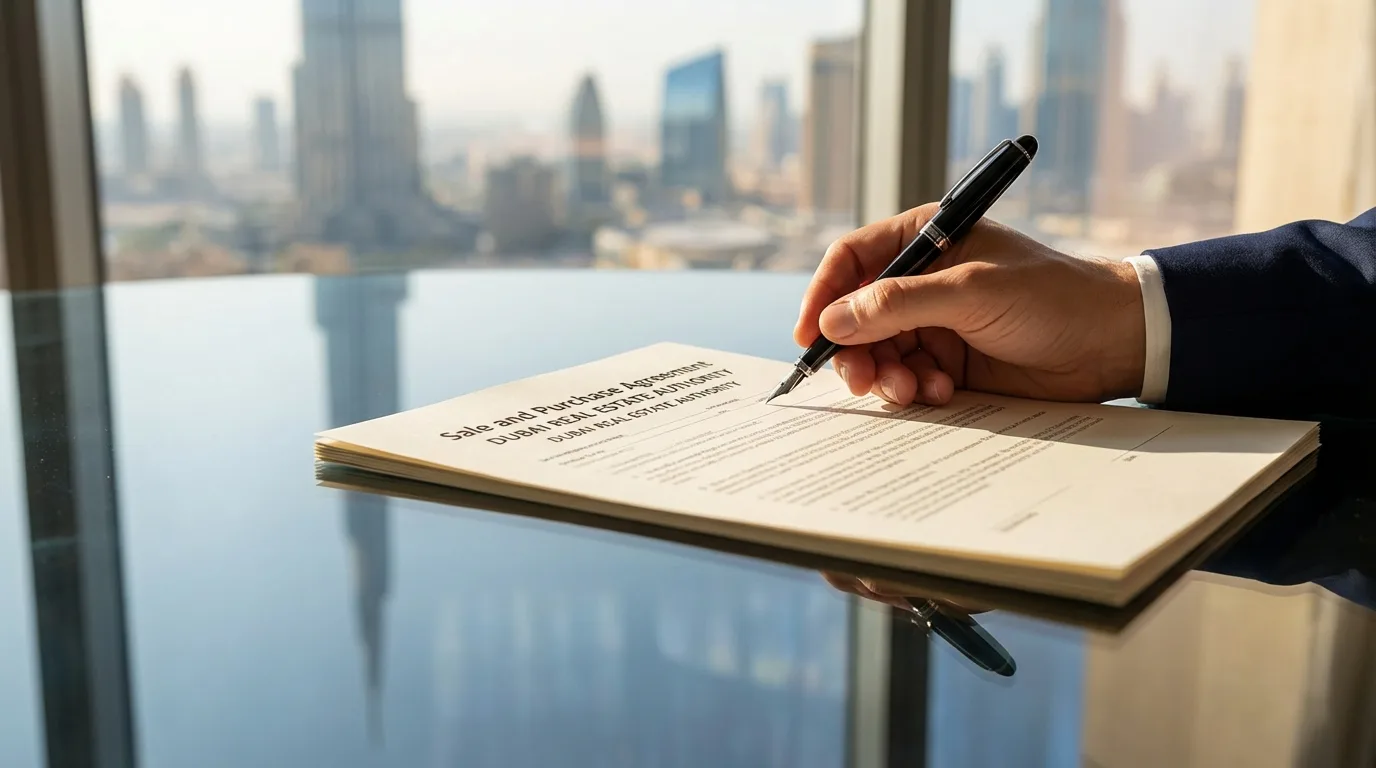
Buying property in Dubai is exciting. This is true whether you buy a home that is ready or one still being built (off-plan). But excitement must be balanced with legal care. The Sales Purchase Agreement (SPA) is the centre of every property transfer in the UAE. This paper is the most important promise a buyer will ever make.
Every buyer—local or international—must fully understand the SPA before signing. It is not just a simple agreement. It is the full legal contract. It protects your rights. It tells you your duties. It guarantees you will get the property when it is finished.
What Is an SPA?
A SPA is simply a legal contract between the seller (or builder) and the buyer. It writes down all the agreed-upon details of the sale.
Simple Definition: The SPA clearly states the exact price. It shows the payment dates. It lists the home’s features. It explains the fines if one person breaks the deal.
SPA vs. Other Papers: Buyers see different papers:
-
MOU: A first paper used early on. It is usually not a final, binding deal.
-
Form F: This is a required form from the Dubai Land Department (DLD). It is used for buying ready homes. It registers the deal with the broker.
-
SPA: This document has the most legal power. It is the final, detailed contract. It is the paper that can be used in court.
The SPA confirms that both sides agree to the sale under specific rules. It is the final legal proof of the deal.
When Do You Get the SPA?

Whether the SPA depends completely on whether you buy a finished home or one that is off-plan.
For Off-Plan Homes: The builder gives the SPA soon after the buyer does two things:
-
Sign the first reservation form
-
Pays the first booking fee
After these steps, the builder must make the SPA. This usually takes a few weeks. The contract then goes to the DLD. It is registered in the Oqood system. This registers the home unit under the buyer’s name even before the building is done.
For Ready Homes (Second Sale): This process takes a little longer.
-
The buyer and seller agree on the price. They sign Form F with the broker.
-
The seller gets a No Objection Certificate (NOC). This paper says the seller has paid all service fees. It shows they are free to sell.
The SPA is usually written and signed after the NOC is secured. It is done just before the final change of ownership at the DLD. The time from agreeing on the price to signing the final SPA can take about three to six weeks. This depends on how fast the NOC comes out and if bank money is needed.
What is inside a spa?

The SPA is a long paper. But some parts are very important. You must read them carefully because they relate to Dubai's specific rules.
-
Who is Who: Full legal IDs for everyone involved. This includes passport copies and RERA numbers.
-
Project Name: The exact name of the project. The plot number. The official DLD registration number.
-
Home Details: This is vital. It includes the unit number, the floor, the exact size in feet, and details about the parking spot.
-
Full Price: The final price agreed upon in UAE Dirhams (AED).
-
Payment Dates: A clear list showing what amount is due and on what date.
-
Completion Date: The day the home should be ready for the buyer. It also details how you pick up the keys.
-
Fines for Delays: A key part for off-plan buyers. It says how much money the buyer gets if the builder misses the promised finish date.
-
Warranty Time: The period (usually 12 months after handover) during which the builder must fix any defects found in the home.
-
Building Fees: An estimate of the yearly fees the owner must pay to maintain shared areas like pools and security.
-
Ending the Deal: The rules for when the buyer or the builder can legally cancel the contract. It shows the money costs for this.
-
Problem Solving: It explains how to fix disagreements. This usually points people to the RERA Dispute Committee.
SPA for Off-Plan Homes
The SPA for a home being built is special because you buy something for the future.
RERA Protection: The Real Estate Regulatory Agency (RERA) protects off-plan buyers a lot. All money paid by buyers must go into an escrow account. This is a special bank account that RERA watches. The builder cannot touch this money right away. Money is only released when RERA confirms that parts of the building are complete.
Money Rules: The payment plan in your SPA must follow RERA's rules. For example, if the builder says the project is 60% done, they can only take out 60% of the buyer’s money from the escrow account. This system ensures your money is only used to build your project.
Builder Duties: The off-plan SPA clearly says what the builder must do. This includes the quality of work and the materials used. Buyers should check the part about the builder’s duty to give timely progress updates.
SPA for Ready-to-Move Homes
When buying a finished home, the SPA focuses on making sure the ownership title is transferred clearly.
Bank Loan Time: If the buyer uses a mortgage, the SPA is signed after the bank gives the final loan papers. The SPA must include rules about how long the bank has to send the money. It shows the fine if the bank loan fails.
NOC Before Transfer: The seller must get the NOC from the master developer. This confirms that no debts are tied to the property. The final transfer at the DLD cannot happen without this paper.
Transfer at the DLD: The SPA is the paper you show at the DLD office. On the final transfer day, the buyer gives the last payment (a bank check). The seller gives the signed NOC. The DLD officially changes the property title and issues the new title deed in the buyer's name.
Legal Protection in a SPA
The SPA is the main legal protection for the buyer in the Dubai property market.
Protection from Delays: If an off-plan project is late, the SPA tells you the money penalty the builder must pay the buyer. RERA also has rules that may let the buyer cancel the deal and get a refund if the delay is too extreme.
The SPA protects the seller by forcing the buyer to pay on time. If the buyer misses a payment, the seller can send official warnings. They can legally end the contract and keep some of the money paid. This follows RERA rules.
Dispute Help
RERA has a special group called the Dispute Settlement Committee. If the buyer and seller cannot fix a problem, this group offers a fast, cheap way to solve the legal issue before going to the higher courts.
What cannot change?
Once both sides sign and the contract is registered, the main parts cannot be changed. This includes the price, payment plan, and home details. They can only change if both sides agree in writing. Verbal promises made outside the SPA have no legal value.
What Buyers Must Check Before Signing?

Signing the SPA without expert help is the biggest mistake new buyers make. Focus on these critical details:
-
Payment Plan: Double-check that the payment dates and amounts exactly match what you first agreed to.
-
Hidden Fees: Look closely at the Service Charge section. Is the estimated fee fair? Also, confirm who pays the 4% DLD fee.
-
Home Details: Check that the floor plan is correct for your unit size. If you paid extra for a specific view, make sure the SPA says so clearly.
-
Delay Rules: Understand the exact fine you get if the builder is late. Know the conditions for when you can cancel the deal.
-
Defect Check Time: The period after handover, when you check for things that need fixing, must be clear. This is usually 30 days.
-
Fees After Handover: Check for any required one-time fees due after you get the keys.
-
Selling Before Finish: If you plan to sell the home before it is built, the SPA must detail the process and the fees for this resale.
Common Buyer Mistakes with SPAs
These mistakes happen because buyers do not fully understand the law.
-
Not Checking Payment Terms: Buyers assume the plan is standard. Failing to expect a large payment tied to a sudden milestone can lead to missing a payment.
-
Signing Without Matching Details: Signing a general contract without confirming the exact size or floor plan can cause big problems later.
-
Ignoring Maintenance Fees: Forgetting to look at the estimated service charge can greatly lower the money you make from rent.
-
Not Understanding Penalty Rules: Many buyers do not know that the delay fine may be limited. It may be calculated only on the money they have paid, not the full price.
-
Trusting Verbal Promises: Any promise from a salesperson that is not written into the SPA has no legal value.
-
Not Checking the Builder: Always check that the builder and the specific project are correctly registered with RERA. An unregistered project is a massive risk.
SPA and DLD Fees
Signing the SPA often means you must immediately pay the DLD fees.
Price for Fees
The price written in the SPA is the number the DLD uses to calculate the required transfer fees.
Who Pays?
The buyer typically pays the 4% DLD transfer fee. This fee is based on the home’s price. It is paid to the DLD office.
When to Pay?
-
For Off-Plan: The 4% DLD fee is usually paid upfront when the SPA is signed to register the contract.
-
For Ready-to-move Homes: The 4% DLD fee is paid on the final transfer day at the DLD office, along with the last payment to the seller.
Knowing when to pay is key to planning your money.
How does our agency help with the SPA?

Working with a trusted real estate expert like FP Property adds a key layer of protection when you deal with the SPA. Our job is more than finding the right home. We make sure the contract is strong and protects your investment.
We look at every single section in the SPA. We check it against the current RERA law. This makes sure all the terms are fair and standard for the whole industry. We verify that the contract is fully legal and balanced.
We confirm that the builder has all the necessary approvals from RERA. We also check that the special escrow bank accounts are active. This step makes sure the project status is accurate and that your money is safe.
Our agents clearly tell you about the money risks and legal risks. This includes the rules for project delays, the rules for ending the contract, and the cost of service fees. This helps you understand the downsides before you sign.
We speak up for you in the process. We make sure the SPA clearly writes down every feature and extra you are paying for. This leaves no room for confusion about what you should receive.
If you plan to use a bank loan, we work with your bank and the seller. We make sure the SPA has the correct rules for the loan. This ensures the timelines are right to protect you from any penalties.
What Happens After Signing?

Once the SPA is signed and registered, the buyer begins the next part of the deal.
-
Payment Starts: The buyer must pay strictly on the dates listed in the SPA.
-
Building Updates (Off-Plan): The builder will send updates about the progress. This should match the payment schedule.
-
Defect Check Near the End: As the home nears completion, the buyer is invited to check for defects. This is called the snagging inspection. The builder must fix these defects before giving the keys.
-
Final Payment and Keys: After the defect check and the completion paper are done, the buyer makes the final payment. They then get the keys and access cards.
-
Title Deed: For off-plan, the builder manages the final DLD transfer. They issue the official title deed in the buyer's name. This paper is the ultimate proof of ownership.
Can You Cancel a SPA? (Rules and Fines)
Cancelling a legal SPA is hard. It involves penalties, unless the builder breaks the agreement.
RERA has clear rules for ending a deal. This is based on how much the builder has finished. If the builder has not reached a certain stage after a long time, the buyer may have the legal right to cancel and get a refund.
-
Buyer Cancellation Fines
If the buyer cancels without the builder being at fault, the SPA and RERA law let the developer end the deal. They can legally keep a part of the money already paid (often 30% to 40% of the total paid).
-
When You Can Cancel Without a Fine?
The buyer can legally end the deal without a fine only if the builder breaks a major term of the SPA. Examples are a very long, unfixable delay or a big change in the home’s details that the buyer did not approve.
Final Thoughts
The Sales Purchase Agreement is the most important piece of paper in your Dubai property investment. Understanding all its details is vital for protecting your money. It guarantees the quality of your future home. It is a shield when you understand it and a risk when you ignore it.
Do not try to read this complex legal document alone. If you are about to sign an SPA for any property in Dubai, make sure expert eyes review the terms.
Contact FP Property today. We offer guided purchase support. We ensure every detail of your SPA matches your money goals. We make sure your rights as a buyer are fully protected under Dubai law.
Common Questions About SPA in Real Estate Dubai
Is SPA legal?
Yes, absolutely. Once both sides sign and the DLD registers it, it is a full, enforceable contract.
Can I change the SPA?
Yes, but only if both the buyer and the seller agree to the changes. All changes must be written down in a formal addendum to the first contract.
What if the builder is late?
The builder must pay the buyer money. This follows the delay penalty rule in the SPA. If the delay is very long, RERA allows the buyer to seek termination and a refund.
How do I check my SPA?
Your SPA should be registered with RERA. For off-plan, you will get an Oqood certificate. You can check the builder and project status using the DLD or RERA official channels.
Do I need a lawyer?
While not required for every sale, getting an expert or legal review is highly recommended. The complex rules about delays, fines, and service charges make independent review a smart investment.