
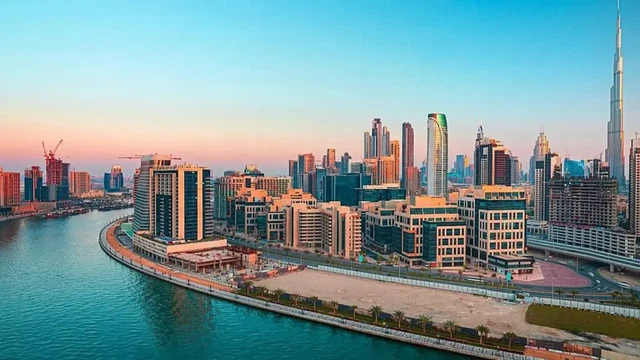
Over the past decade, Dubai has transformed from a regional business hub into one of the world’s most dynamic Dubai real estate markets (As of Feb 2026, Dubai continues to attract strong global investor demand and population growth, reinforcing its position as a leading property investment hub).
In Dubai, off-plan property is a large subject. It involves making purchases of a property before it is complete or even begun. The buyers invest according to plans, drawings, and the reputation of the developer, and delivery of the unit to the buyer comes way ahead of time.
What makes it attractive? There are a good number of off-plan properties in Dubai with the potential to yield better returns on the finished properties. Investors are able to secure units at low launch prices and have the luxury to pay using any financial options.
In Dubai, an off-plan purchase implies getting in early, paying less, and getting an upside. New or experienced, being aware of how the system works opens up numerous opportunities.
Understanding Off-Plan Property: Definition & Market Mechanics

What does “Off-Plan” Mean?
Off-plan property is a residential area or an apartment that is purchased prior to the completion of the construction. Investment enables the buyers to examine designs, layout, and the final product promoted.
How do Off-Plan Payment Plans Work?
Off-plan projects are organised with stage payments, unlike the ready property, which demands full payment in advance, such as:
● ● Reservation/Down Payment – Typically 10–20% at the time of booking.
● ● During Construction – Payments are made in installments linked to construction milestones (e.g., 40% spread over 2–3 years).
● ● At Handover – The remaining 40–50% is due when the property is complete and ready for occupation.
Others also allow purchasers to pay after delivery within 2-3 years, as long as they are likely to collect rent. This is useful in maintaining a low cost and stable cash flow. (As of Feb 2026, extended post-handover payment plans remain widely offered by developers to attract investors.)
Legal and Regulatory Support for Off-Plan in Dubai
Dubai’s off-plan sector is well-regulated, ensuring investor protection through several key frameworks:
● ● Dubai Land Department (DLD)
● ● Real Estate Regulatory Agency (RERA)
● ● Escrow Accounts: Developers must deposit all buyer payments into a government-approved escrow account.
Key Market Metrics & Recent Trends

The dominance of off-plan sales in Dubai’s property landscape is remarkable. According to 2025 reports from Khaleej Times and Bayut:
● ● Off-plan sales account for roughly 63–69% of total residential transactions in Dubai — a record-high share of the market. (As of Feb 2026, off-plan transactions continue to dominate the market, remaining above 65% of total sales.)
● ● Q2 2025 saw a 43% surge in off-plan apartment transactions quarter-on-quarter, led by areas like Jumeirah Village Circle (JVC) and Business Bay.
● ● Analysts predict that over 70,000 new homes will be delivered in 2025, with off-plan sales remaining a major growth driver. (As of 2026, strong project pipelines continue in line with Dubai’s long-term urban development plans.)
These figures highlight how the off-plan sector isn’t a niche anymore — it’s the engine of Dubai’s property market.
Why Off-Plan Properties Offer High Profit Potential in Dubai?
Let’s explore why off-plan investment in Dubai continues to deliver some of the highest profit margins for investors.
- Lower Entry Price & Early-Bird Incentives
Ready properties are nearly always purchased at a higher price than off-plan ones when they are launched. Discounts and money back are offered by developers to early buyers. - Flexible Payment Plans/Staggered Payments
Off-plan also allows one to pay in installments as opposed to ready properties, which require the full payment. This assists investors in making small installments during the construction process.
Developers have introduced creative plans such as:
● ● 60/40 (60% during construction, 40% at handover)
● ● 70/30 (70% during build, 30% post-handover)
This structure enables investors to participate with minimal financial strain.
- Capital Appreciation during Construction
The property market in Dubai expands, and the prices of the properties increase between the time of launch and completion.
As a project approaches its completion and the demand is high, investors may sell at a high price or retain it on a long-term basis. Property prices may increase by 10-25% in hot markets such as Business Bay or Downtown Dubai when it is under construction. (As of Feb 2026, prime locations continue to show consistent appreciation trends.)
- Modern Amenities & Design Advantage
New off-plan projects in Dubai have modern design, quality fittings, and new technologies like smart homes, workstations, penthouses, and green areas. - Strong Rental Demand & Yields Post-Handover
Expats, tourism, and business have made Dubai one of the best rental markets in the world. Typically, 6-8% average rental returns are offered by investors after handover. (As of Feb 2026, rental yields in key areas average 6–8.5%.) - Legal/Regulatory Safeguards
The close supervision of the projects by VRA, Escrows, and developer transparency stipulations mitigates fraud or project abandonment, making it safer than other markets in the world. - Location & Infrastructure Growth Pull
Dubai continues to expand with new metro extensions, new airports, and metropolitan communities, including Dubai South and Expo City Dubai, further contributing to its growth in the future. (As of 2026, infrastructure expansion continues to support long-term investment growth.)
Key Factors That Influence Profitability in Off-Plan Investments

While off-plan offers high potential, not every project guarantees success. Here are the main factors that determine profitability:
Developer Reputation & Delivery Record
The risks of delays and poor quality construction are reduced to a minimum, in case the developer is reputable with a good history of delivery.
Project Location
No particular location, such as Business Bay or Downtown Dubai, is assured of yielding higher returns and easy rentals. Recent locations like Jumeirah Village Circle (JVC) or Dubai South may increase in value, but you have to hold them longer.
Payment Schedule & Handover Timeframe
Long construction periods allow you to pay in phases and are even becoming more common, but there is the risk that market conditions change.
Size/Type of Unit & Target Demographic
Studio apartments and one-bedroom apartments tend to rent at a higher rate, and young workers and people who travel a lot prefer these apartments. Families purchase bigger units or villas, which remain stable in the long term.
Exit Strategy: Rental vs Resale
Are you buying to flip upon handover, or to hold for rental income?
Market Supply & Demand Balance
When new units are introduced in an area, the prices and rent drop.
Service Charges, Management & Maintenance
Net profit could be eaten by high service charges or poor management of the property.
Regulatory Changes & Macro Environment
Investor-friendly policies continue to support Dubai property investment growth. (As of Feb 2026, global investor demand remains strong.)
Popular Areas & Project Types for Off-Plan Investment in Dubai
Here are some of the most promising zones and property types in 2025: (These areas continue to perform strongly in 2026.)
- Jumeirah Village Circle (JVC)
It is one of the strongest off-plan communities in Dubai.
Expected rental yields: 7-8%. - Business Bay
Active commercial and residential construction makes demand strong. - Dubai South (near Al Maktoum Airport & Expo City)
Emerging mega-community tied to Dubai’s 2040 vision. - Dubai Hills Estate
High-quality master-planned community developed by Emaar Properties. - Al Khail Corridor & Meydan
With a fast-growing population of road networks, metro connections, and a relationship to Downtown.
Future Mega-Projects
Dubai Skyline is changing with new mega projects like Dubai Creek Harbour, Expo City Dubai, and Dubai Islands, which are changing the skyline. (As of 2026, these continue to be key future investment zones.)
Common Risks and How to Mitigate Them
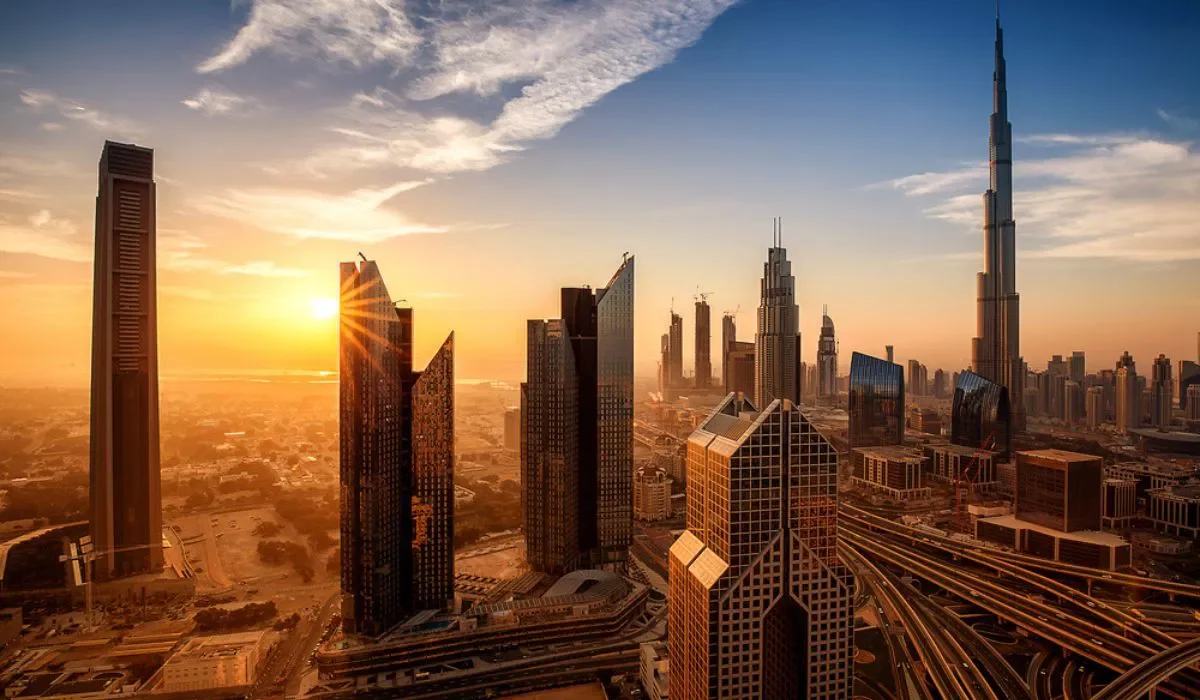
Good returns can be realised in the off-plan market in Dubai, although there are risks associated with it, just like with any other investment.
Construction Delays and Handover Risk
Indeed, the construction or completion process may slow down your gains and may be a burden on your cash flow due to the bureaucracy in the process.
Mitigation:
● ● Choose developers with proven on-time delivery records.
● ● Confirm that the project is RERA-registered and linked to a valid escrow account.
● ● Always review the Sales and Purchase Agreement (SPA) to see the handover timeline and penalty clauses for delay.
Changing Market Conditions
The prices of property vary depending on the interest rates, trends in the world market, and the supply and demand cycle. The value of rent or resale may decrease abruptly when the supply is excessive.
Mitigation:
● ● Focus on prime or high-demand communities (Business Bay, Dubai Hills, JVC) that are resilient to market shifts.
● ● Diversify across multiple projects or developers instead of committing all capital to one.
● ● Have a medium to long-term horizon (3–5 years) rather than short-term flipping expectations.
Liquidity Risk (Selling Before Handover)
Off-plan units may be substandard when it comes to selling before completion. There can be a limit to which developers can resell before a point of payment (mostly 30-40%).
Mitigation:
-
● Ensure that the developer has a resale policy, as well as the No-Objection Certificate (NOC).
-
● Collaborate with a large broker who can find secondary buyers according to the direction of the developers.
Hidden Costs
Additional costs of investment can be service fees, completion construction, and fluctuations. Certain investors do not consider the cost of registration of DLD.
Mitigation:
● ● Always ask for a detailed cost breakdown before signing.
● ● Review annual service charge estimates (in AED per sq. ft).
● ● Conduct snagging and quality checks before taking possession.
Overpaying or Choosing the Wrong Micro-Market
Buying into a project that’s overpriced or located in an oversupplied area can suppress returns.
Mitigation:
● ● Compare price per square foot with nearby projects.
● ● Check Property Finder data for recent sales in the area.
● ● Consult a reputable agent who knows the real market trends — not just marketing promises.
How to Evaluate an Off-Plan Investment Opportunity (Checklist for Investors)

When investing in an off-plan property, it can be very rewarding, but due considerations must be made to ensure that the risk is lowered and the benefits are maximised. The following is a checklist for the investors to consider before committing:
Tracker Record
Evaluate the history of the developer concerning on-time delivery, the history of past projects and reputation in Dubai. Older developers who already have several products that have been launched are more reliable.
Payment Plan
Check on the deposit plan, instalment payments during construction and any payment at the end once the construction has been completed. Flexible plans lead to a decrease in finances and enhance convenience.
Project Status
Check whether it is pre-launch, just launched or whether construction is going on. Knowing milestones in construction and the approximate time to hand over.
Location
This evaluates access, proximity to facilities, future development and connectivity to business centres or transport styles. The location is a major source of influence on the rental demand and resale value.
Market Data
Calculate the expected rental yield, the average selling price per square foot, and the past increase towards the property to predict the prospective returns.
Potential Resale and Rental
Assess the liquidity of similar properties, demand by the tenant, and likely area of ROI, both in the short run and long run.
Service Charges
Non-income: Evaluate the projected community maintenance charges and their effect on the net rental income. Compared to similar developments in the nearby area.
Exit/Flip Conditions
Learn the requirements of NOC, resale and policies of the developer to provide flexibility in case they need to sell or transfer in future.
Legal/Registration
Have the Escrow account of the project, Oqood registration (of Dubai off-plan), and adhere to the RERA regulations to invest in the project legally.
Risk Factors
The local supply pipeline, cancellation procedures, and other unseen expenses, such as fees that can occur during or after the handover, should be considered.
A close examination of each of these aspects can enable investors to make an informed decision, minimise uncertainties, and maximise returns on the Dubai off-plan property market.
Case Study: Realistic Off-Plan Investment Scenario
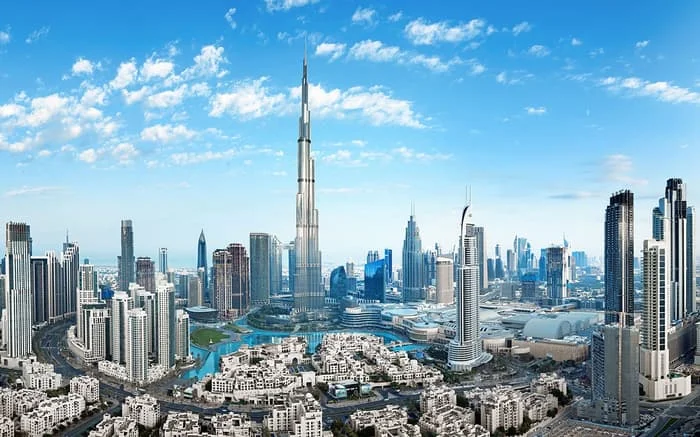
Let’s illustrate how an off-plan property investment in Dubai can work in real numbers.
Example: 1-Bedroom Apartment in Jumeirah Village Circle (JVC)
● ● Launch Price: AED 900,000
Payment Plan:
○ ● 10% deposit = AED 90,000
○ ● 40% during construction = AED 360,000 (over 2 years)
○ ● 50% on handover = AED 450,000
● ● Construction Period: 3 years (2025–2028)
● ● Estimated Price Appreciation: 12% over construction
Projected value at handover: AED 1,008,000
● ● Expected Rental Yield Post-Handover: 7% annually (~AED 70,000/year)
● ● Service Charges: AED 10–12 per sq. ft (moderate level)
Scenario 1 – Normal Market:
If the investor sells at handover, profit = AED 108,000 (12% appreciation)
If rented for 3 years post-handover, the total rental income ≈ is AED 210,000
Total 3-year ROI ≈ 25–28%
Scenario 2 – Slower Market:
If handover delays by 6 months or prices rise only 5%, profit reduces to AED 45,000.
However, rental income still provides a 6–7% annual yield, cushioning downside risk.
This shows that even with moderate appreciation, off-plan properties can deliver solid overall returns when combined with post-handover rental income.
Why Choose a Reputed Broker (like Ours) for Off-Plan Investing?
We deal with the best off-plan developers in FP Property in Emaar, Damac Properties, Sobha Realty, and Ellington Properties. (These developers continue to lead off-plan launches in 2026.)
One of the most important things that you would like to do when entering the Dubai off-plan market is to partner with a professional brokerage.
Here’s How We Add Value:
● ● Access to Launch-Phase Deals: Get first-hand access to pre-launch inventory and exclusive discounts from Dubai’s top developers.
● ● Negotiation Power: We help secure flexible payment plans, waived fees, or incentives often unavailable to independent buyers.
● ● Due Diligence Support: Our team verifies escrow registration, developer credentials, and project timelines to safeguard your investment.
● ● Portfolio Advice: We compare different off-plan projects and recommend those that match your ROI goals and risk appetite.
● ● Post-Handover Support: From property management to rental listings, we assist in maximising your long-term yield.
We deal with the best off-plan developers in FP Property in Emaar, Damac, Sobha, and Ellington. Your objectives will be custom-made to have either high-yield apartments, family villas, or studio units.
Conclusion & Next Steps for Potential Investors
The off-plan property market of Dubai is still one of the most profitable UAE real estate investments worldwide, with good fundamentals and a deep potential for long-term growth and investor protection.
When executed strategically, off-plan investing in Dubai offers several advantages for investors. Buyers can enter the market at a lower price point compared to ready properties, making it more accessible for long-term wealth building. Flexible payment schedules allow investors to manage cash flow efficiently while the property is under construction.
During this period, capital appreciation can significantly enhance the eventual value of the asset. Finally, once handed over, off-plan properties often deliver high rental yields, making them an attractive option for income-focused investors.