

What if you could own a slice of a premium Dubai apartment for the price of a weekend away? In 2026, you can. Real estate tokenization has turned Dubai property — long seen as a market for those with deep pockets — into something you can buy into from as little as AED 2,000.
It's no longer an experiment, either. In February 2026 the Dubai Land Department launched a live secondary market for tokenized property, letting investors trade fractional stakes the way you'd trade shares. This guide explains what tokenization actually is, how fractional ownership works through the government-backed PRYPCO Mint platform, the returns and risks, and how it fits alongside traditional property investment.
What Is Real Estate Tokenization?
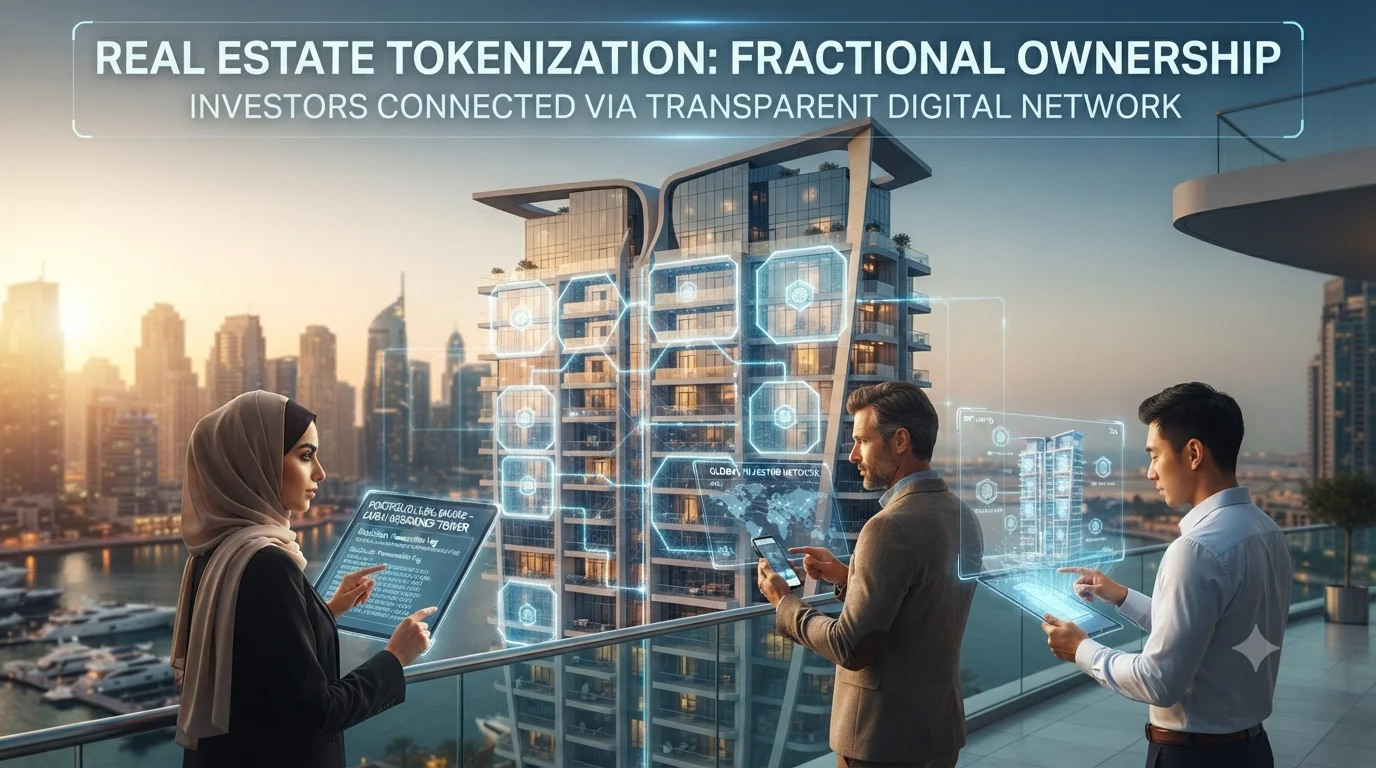
Real estate tokenization is the process of converting ownership of a property into digital tokens recorded on a blockchain. Each token represents a defined percentage of a specific property's value. Buy ten tokens and you own ten tokens' worth of that home — proportional to your share — including a proportional slice of its rental income.
Crucially, this isn't a workaround or an unregulated crypto scheme. In Dubai, tokenized property titles are recorded on the blockchain and synchronised with the DLD's official land registry, so your fractional ownership is backed by the same authority as a full title deed.
The result is fractional ownership: instead of one buyer purchasing a whole unit, many investors each own a piece — lowering the entry barrier dramatically and letting you spread capital across several properties instead of tying it all into one.
How It Works in Dubai: The PRYPCO Mint Platform

Dubai's tokenization market runs through PRYPCO Mint, the region's first regulated real estate tokenization platform. It wasn't built by a startup in isolation — it's a government-backed initiative developed with the Dubai Land Department (DLD), the Virtual Assets Regulatory Authority (VARA), the Central Bank of the UAE, and the Dubai Future Foundation, under the DLD's Real Estate Evolution Space (REES) initiative.
Here's how it works in practice:
-
● Properties are tokenized and listed on the PRYPCO Mint app, with each token representing a fixed share of the property's value.
-
● You invest from AED 2,000 (roughly USD 540), buying as many tokens as you like — up to a maximum of 20% of a single property, which keeps ownership spread across many investors.
-
● Title deeds are recorded on the XRP Ledger blockchain and reconciled against the DLD's traditional registry, so your stake is officially recognised.
-
● Rental income is distributed automatically. Smart contracts handle dividend payouts from rental yields in proportion to your holding — no chasing tenants or managing maintenance.
If you're weighing tokenized exposure against a conventional purchase, our investment advisory team can walk you through both routes.
What Changed in 2026: The Secondary Market

The biggest development is liquidity — historically real estate's weakest point. On 20 February 2026, the DLD launched Phase 2: a live secondary market letting investors buy, sell and transfer roughly 7.8 million tokens 24/7 through the PRYPCO Mint app.
That matters because it solves the classic problem with property — you can't sell half a villa when you need cash. Now, in theory, you can exit a fractional position without waiting months for a full-property sale.
The momentum behind it is real. Since the May 2025 pilot:
-
● Properties have sold out in as little as two minutes.
-
● Investors from 50+ nationalities have taken part.
-
● Over AED 18.5 million was invested during the pilot phase.
-
● A AED 1.75 million villa sold out in under five minutes to 169 investors from 40 countries.
Forecasts suggest tokenized assets could reach AED 60 billion by 2033 — around 7% of Dubai's total property market.
Tokenization vs Buying Property Outright
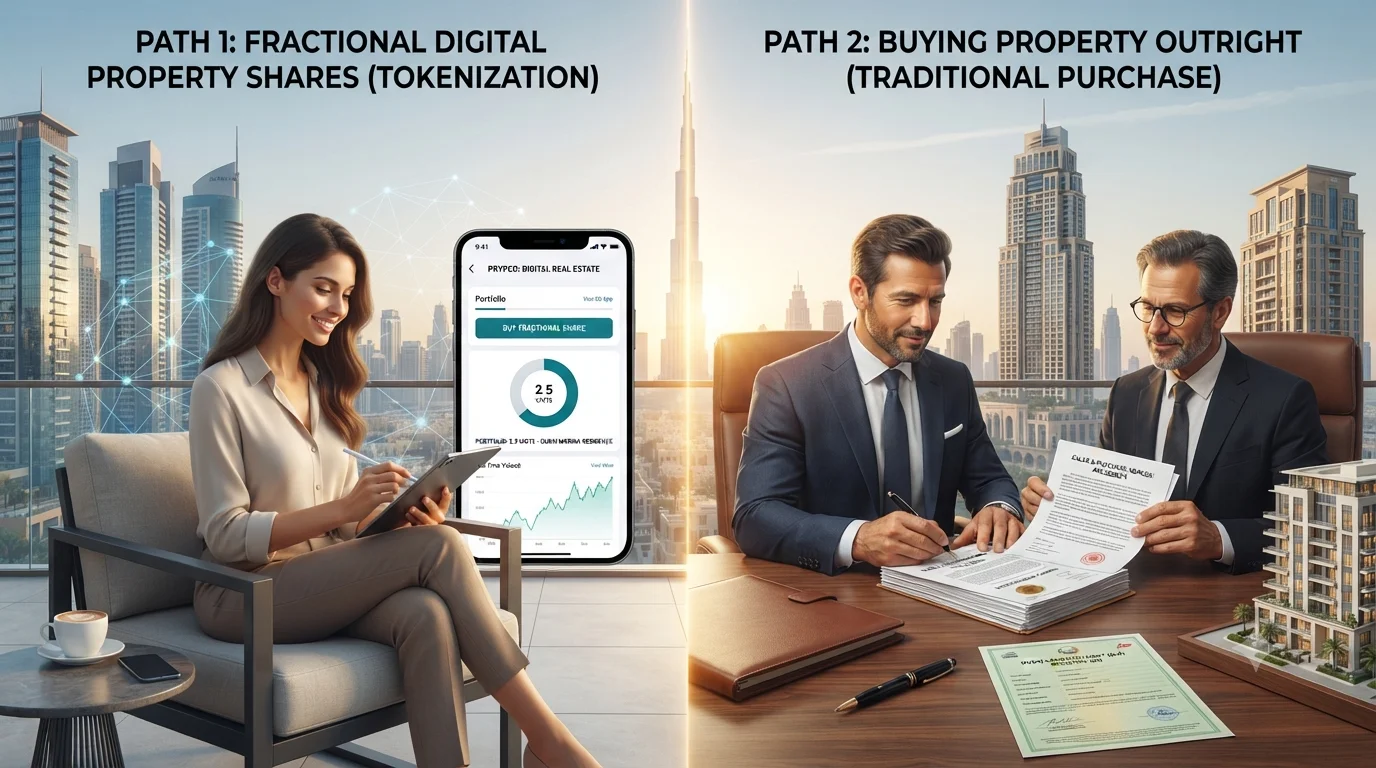
Fractional ownership isn't a replacement for owning a whole property — it's a different tool. Here's how they compare:
|
Factor |
Tokenized (fractional) |
Traditional (whole property) |
|
Entry cost |
From ~AED 2,000 |
Typically AED 500,000+ |
|
Ownership |
A share (max 20% per property) |
100% |
|
Rental income |
Auto-distributed, proportional |
Full, self-managed |
|
Liquidity |
Tradable on secondary market |
Sell the whole unit (slower) |
|
Management |
Handled via platform |
Your responsibility (or a manager) |
|
Golden Visa eligibility |
Generally not (below thresholds/partial) |
Yes, from AED 2M ownership |
|
Control |
None over the asset itself |
Full |
A quick but important note: fractional token holdings generally do not qualify you for the Golden Visa, which requires AED 2 million of property ownership in your name. If residency is your goal, traditional ownership is the route — see our UAE Golden Visa through property 2026 guide.
Benefits and Risks
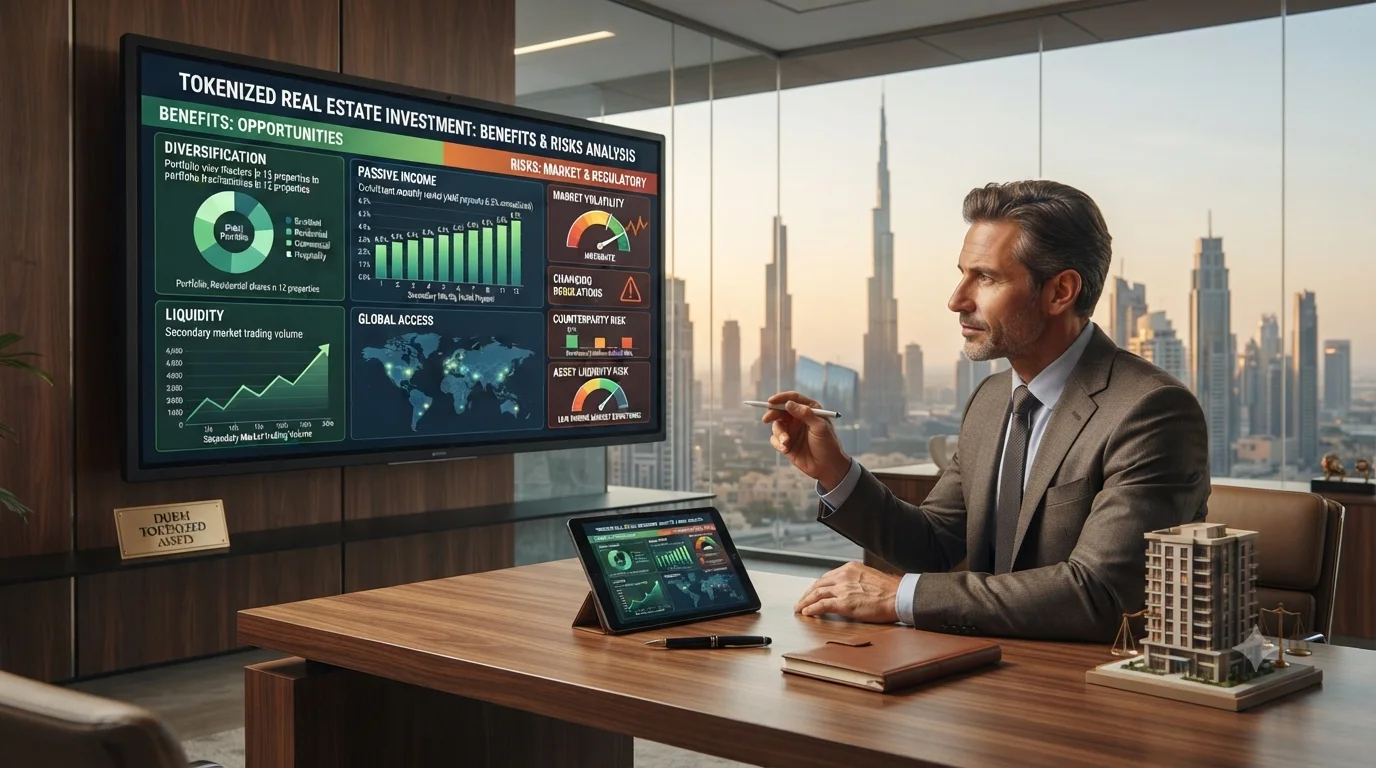
Benefits
-
● Low entry point — start investing in Dubai real estate with a few thousand dirhams.
-
● Diversification — spread capital across multiple properties and areas.
-
● Passive income — automated rental distributions, no landlord duties.
-
● Improved liquidity — the secondary market lets you exit partial stakes.
-
● Regulated and DLD-backed — real title-deed recognition, not an offshore product.
Risks and things to weigh
-
● Newer market — the secondary market only launched in 2026, so long-term liquidity and pricing are still maturing.
-
● No control — you don't decide when the underlying property is sold or how it's managed.
-
● Capital at risk — property values can fall; tokenized stakes carry the same market risk as any real estate, plus platform-specific risks.
-
● Eligibility and KYC — you'll need to meet the platform's onboarding and identity requirements.
For a broader view of the market backdrop, see Is Dubai real estate still a good investment in 2026?.
FAQ
What is real estate tokenization in Dubai?
It's converting property ownership into blockchain-based tokens, each representing a share of a specific property. In Dubai the tokens are synchronised with the DLD land registry, so fractional ownership is officially recognised — not an unregulated crypto product.
How much do I need to start investing in tokenized property?
As little as AED 2,000 (about USD 540) through PRYPCO Mint. You can buy multiple tokens but no more than 20% of a single property.
Is tokenized real estate legal and safe in Dubai?
It operates within a regulated framework built by the DLD, VARA, the Central Bank of the UAE and the Dubai Future Foundation, with title deeds recorded against the official registry. As with any investment, capital is still at risk and you should do your own due diligence.
How do I earn money from tokenized property?
Two ways: proportional rental income distributed automatically via smart contracts, and any capital gain if your tokens rise in value — which you can realise by selling on the secondary market launched in February 2026.
Does fractional ownership qualify me for a Golden Visa?
Generally no. The Golden Visa requires AED 2 million of property owned in your name, so partial/fractional token holdings typically don't meet the threshold. Traditional ownership is the route for residency.
The Bottom Line
Tokenization is one of the most significant shifts in how people access Dubai real estate — turning a high-capital, illiquid asset into something you can buy into for a few thousand dirhams and trade when you need to. With the DLD-backed framework and the 2026 secondary market now live, it's a legitimate, regulated way to start (or diversify) a Dubai property portfolio. It won't get you a Golden Visa or control over a building, but for accessible, passive exposure, it's compelling.
Want to explore fractional ownership or a traditional purchase? Footprint Real Estate has advised UAE investors since 2004 across both traditional and emerging routes. Get in touch to find the right approach for your budget and goals, or browse current properties for sale across the UAE.