

Dubai has quickly become a top choice for Indian real estate investors, and the reason is clear. You are investing in a rapidly growing global city, benefiting from zero personal income tax, and enjoying a refined international lifestyle — all while maintaining strong ties to home. Dubai serves the needs of many Indians looking to better their lifestyle and make investments in ways that few other markets do.
Indians now make up approximately 40% of all Dubai property buyers, making them the single largest investor nationality in the market. What makes Dubai so appealing? First, it allows non-UAE citizens to own land and property completely in freehold zones. Second, it has strong capital gain potential and rental yields. Third, the tax system is investor-friendly — no annual property tax, no capital gains tax and no inheritance tax in most cases. Dubai offers average rental yields of 6–8%, with some prime areas yielding even higher returns, compared to just 3–4% in major Indian cities.
Any Indian citizen aged 21 or older — including NRIs, PIOs and OCIs — can purchase real estate in Dubai. This article explains how, where, and what to watch for regarding the specific legal, regulatory and financial consequences for Indian citizens.
Can an Indian Citizen Buy Property in Dubai?
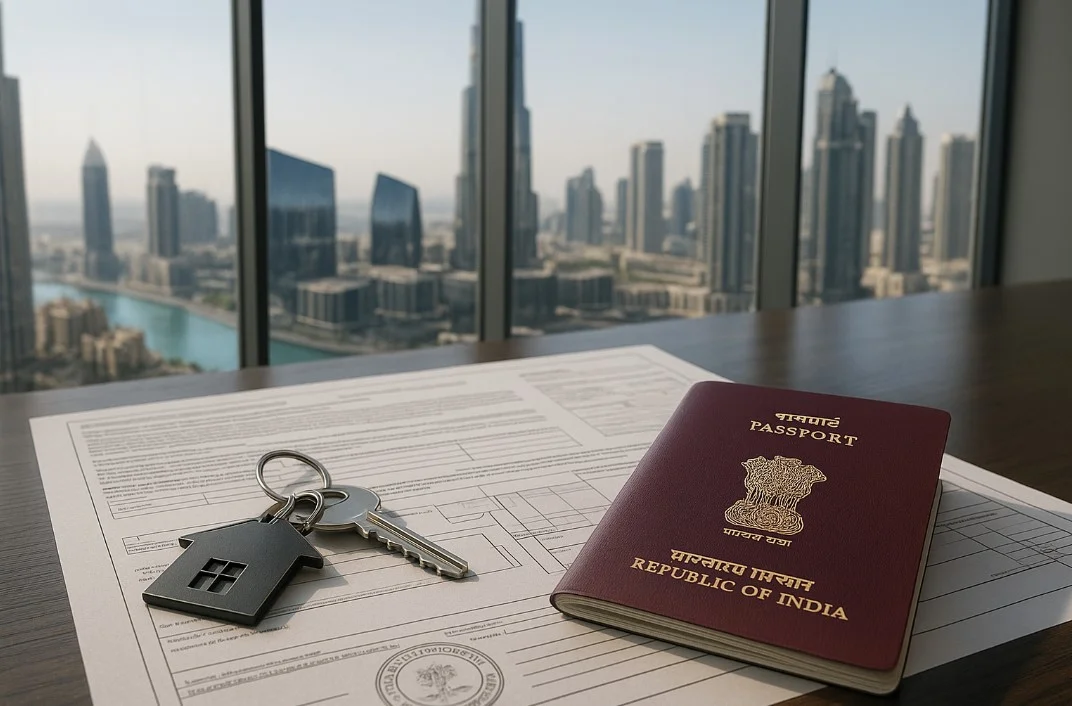
Yes. All Indians can buy property in Dubai in designated freehold zones. Dubai real estate is a desirable prospect because it can also contribute to residency options. Dubai's real estate market recorded over AED 431 billion in transactions in the first half of 2025 alone — its strongest mid-year performance to date, with a significant surge in investor activity.
Ownership Regulations
In Dubai, foreigners have the right to purchase real estate in specific freehold areas. Non-UAE nationals have the right to buy land and property in designated areas under the Dubai Land Department (DLD) and Law No. 7 of 2006 on Real Estate Registration.
Status of Residency
You do not need to hold a UAE residence visa or live full-time in Dubai to buy property. Indian nationals and other foreigners who do not live in the UAE can make purchases in freehold zones.
Age, Citizenship, Individuals vs Companies
For Indian buyers, you must be 21 or older and be an Indian citizen, NRI, OCI or PIO. Any eligible buyer can purchase real estate, though special guidelines apply if buying through a business entity.
Freehold vs Leasehold: What Areas Can Indians Buy In?
Indian customers — including NRIs, PIOs and OCIs — may purchase property in specific freehold regions where they become full owners with the freedom to sell or transfer the property. The main freehold regions include Dubai Marina, Downtown Dubai, Palm Jumeirah, Business Bay and Jumeirah Lake Towers.
Leasehold properties grant ownership rights over a set period of up to 99 years and are limited to specific areas. Foreign investors are less likely to go leasehold but will find cheaper alternatives available in some newer communities.
There are three types of property rights in Dubai:
- ● Freehold — Complete ownership of the land and building
- ● Leasehold — Long-term lease of up to 99 years
- ● Usufruct/Musataha — Right to use and benefit from the property
Indian Regulatory Side: FEMA and LRS — Critical 2026 Updates

This is the most important section for Indian buyers and has seen significant regulatory developments heading into 2026.
Indian residents typically use the Liberalised Remittance Scheme (LRS) to purchase property overseas. Under the scheme, a resident individual can remit up to USD 250,000 per financial year (April–March) for permitted transactions, including the purchase of foreign real estate. All funds routed through LRS must flow via an authorised dealer bank, and the property along with any rental or sale proceeds must be disclosed in Indian tax filings.
The LRS purpose code for overseas property purchases is S0005 (Indian investment abroad in real estate). Banks will insist on a Sale and Purchase Agreement or equivalent closing documents before processing the transfer. Using the wrong purpose code can lead to reporting mismatches under FEMA and may not qualify as a valid overseas property investment during audits.
Family pooling: The USD 250,000 cap is per individual. Families can pool their limits by making each contributor a co-owner. A couple and their adult child can collectively remit USD 750,000 in one year towards a single property purchase.
Critical warning on mortgages: Indian residents are not permitted to raise foreign loans or avail of UAE bank or developer financing to acquire overseas property. Under FEMA, the purchase must normally be funded through LRS remittances. Resident Indians generally cannot take foreign loans to buy overseas property, and overseas borrowing for buying property abroad could violate FEMA borrowing regulations. NRIs using NRE/FCNR accounts are subject to different, more flexible rules.
FEMA Enforcement: A Major New Risk Indian Buyers Must Know

This is a critical new development. A growing number of Indian residents and NRIs who purchased luxury homes in Dubai are facing legal scrutiny from Indian authorities, including the Enforcement Directorate (ED) and Income Tax Department, for suspected violations of FEMA, the Black Money Act, and potential links to money laundering. Investigators allege many transactions were executed using non-compliant channels including cryptocurrency wallets, high-limit credit cards or free-trade zone shell companies — bypassing the RBI's LRS cap.
Under FEMA, violations can attract penalties of up to 3× the transaction value. The Black Money Act allows for tax and penalty up to 120% of the asset value if foreign property is found to be undisclosed. If the ED finds evidence of laundering, criminal prosecution under PMLA could follow.
The message is simple: always use authorised dealer banks, always use LRS purpose code S0005, and always disclose the property in your annual Indian income tax return under Schedule FA.
Legal Framework and Ownership Rights in Dubai
Article 3 of Law No. 3 (2006) defines the land parcels considered freehold that can be purchased by non-UAE nationals. This law allows non-UAE citizens to purchase real estate in specific freehold zones such as Jumeirah Village Circle and areas of Downtown Dubai.
Role of DLD and RERA
The Dubai Land Department (DLD) is responsible for property registration, title deeds, transactions and laws. RERA licences brokers and developers, monitors escrow accounts for off-plan projects and guarantees transparency.
What Freehold Ownership Means for Foreigners
If your name appears on the title deed, you have the right to sell, rent out, inherit or gift the property. You also own the ground on which the property is built. These rights are offered to foreign nationals in specified freehold zones.
Which Zones in Dubai Can Indian Buyers Buy In?
Popular Freehold Zones for Indian Buyers:
- Downtown Dubai (Burj Khalifa area)
- Dubai Marina
- Palm Jumeirah
- Jumeirah Lake Towers (JLT)
- Jumeirah Village Circle (JVC)
- Business Bay
Which Zones Are More Investment vs Owner-Occupier Friendly?

Luxury apartments in Dubai Marina and Downtown give high rental yields and strong short-term returns. Downtown Dubai offers rental yields of 5.95–6.24% for apartments, while Dubai Marina commands premium rents of AED 200,000+ annually for villas with 10–15% annual appreciation. Palm Jumeirah is a prestigious location with 10%+ annual appreciation, ideal for short-term rentals.
Villas in JVC, Arabian Ranches and Palm Jumeirah are suitable for school communities, families and expatriate lifestyles.
Tips Specifically for Indian Buyers
- ● Look for areas with a high concentration of Indian expats
- ● Budget for yields and all expenses beyond the purchase price
- ● Palm Jumeirah is the most luxurious and expensive zone — JVC and Arjan offer more accessible options
- ● Resale and rental demand is higher close to commercial centres, metro stations or airport areas
- ● In-person visits and property inspections are recommended to better understand the developer's track record
Documents and Procedural Steps: What Indian Buyers Must Have
Required Paperwork:
- ● Valid Indian passport (all buyers)
- ● PAN card (for Indian tax compliance)
- ● Proof of address in India or elsewhere
- ● Bank statements and proof of funds (source of funds)
- ● Developer NOC (particularly for secondary market or resale)
- ● Power of Attorney (if purchasing remotely)
- ● LRS remittance documentation and bank transfer records (S0005 purpose code)
- ● For corporate purchases: company information, beneficial owners and free-zone registration
Step-by-Step Process
Step 1 — Selecting the Property Choose your preferred location and budget based on lifestyle or investment goals. Decide between off-plan for future returns and flexible payment, or ready property for immediate rental income.
Step 2 — Making Offer / Booking Once you have found the right property, make an offer and pay a booking deposit (typically 5–10%). This secures the property while agreements are prepared.
Step 3 — Drafting and Signing the SPA or MoU (Form F) The Sales and Purchase Agreement or Form F fully describes the property, payment plan and both parties' responsibilities. It protects your legal rights and ensures transaction transparency.
Step 4 — Due Diligence Verify the property title, developer's reputation and project status through DLD or RERA before making any payment. Verify the escrow account is active and approved for off-plan properties.
Step 5 — Paying Deposit / Instalments Follow the payment plan in your SPA. For off-plan, payments are made in instalments tied to construction milestones. For ready properties, payment is typically made at the same time as registration.
Step 6 — Registration with DLD Register your purchase with the Dubai Land Department by providing all required documentation, paying the registration fee and receiving your title deed.
Step 7 — Handover or Completion Keys to ready properties are given following complete payment. Off-plan projects transfer ownership after construction completes, following snag inspection and service setup.
Step 8 — Ongoing Management Manage property administration — renting out, paying service charges and registering with the community or strata council.
Payment of Fees
- DLD transfer/registration fee: 4% of property value
- Real estate agent commission: typically 2% of purchase price
- NOC/admin/trustee fees: vary by developer
- Service charges/maintenance: annual recurring cost
Foreign Remittance from India
Indian residents must remit funds through authorised dealer banks under LRS. Using credit cards or unofficial channels can breach FEMA regulations. Always use purpose code S0005 and retain all documentation.
Financing Options: Mortgage Availability for Non-Residents

UAE banks offer mortgages to non-residents including Indian buyers, but at a lower LTV of up to 50–60% and with a higher down payment requirement. However, as noted above, resident Indians (not NRIs) must be extremely cautious — taking a UAE mortgage may violate FEMA regulations. Always consult a FEMA-qualified Chartered Accountant before applying for UAE bank finance as a resident Indian.
Cost Breakdown and Financial Considerations for Indian Buyers
- ● Minimum 40–50% down payment frequently required for non-resident buyers
- ● 4% DLD registration fee
- ● Annual service charges vary by community and facility type
- ● No annual property tax in Dubai
- ● Dubai does not charge personal income tax on rental income or capital gains tax — but Indian nationals must declare rental income from Dubai and capital gains from property sales in their Indian income tax returns. The India-UAE Double Taxation Avoidance Agreement (DTAA) helps prevent the same income being taxed twice.
- ● Capital gains on selling a Dubai property are taxable in India, though exemptions under Section 54 of the Income Tax Act may apply if proceeds are reinvested in residential property in India (capped at INR 10 crore from April 1, 2023).
- ● Currency risk (INR vs AED) affects effective returns — always factor exchange rate fluctuations into financial planning
Visa and Residency Possibilities Through Property Purchase
Buying property alone in Dubai does not automatically confer a long-term residence visa. You must apply under the relevant programme.
Indians who invest AED 750,000 or more in Dubai property can apply for a 2-year UAE investor visa, and those investing AED 2 million or more qualify for the 10-year Golden Visa.
For off-plan properties to qualify for the Golden Visa, the buyer must have paid at least AED 2 million in instalments and purchased from a RERA-approved major developer such as Emaar, Sobha or DAMAC.
The Golden Visa adds significant lifestyle flexibility — you can live, work and study in the UAE, sponsor dependents and travel freely. Always confirm eligibility directly with the DLD or GDRFA before applying.
Risks and Pitfalls Indian Buyers Must Watch Out For
- ● Always check the developer's track record, RERA registration, escrow compliance and project status
- ● Do not pay for Dubai property through international credit cards, cryptocurrency or unofficial channels — Indian authorities are actively investigating such transactions and penalties can reach 120% of the asset value under the Black Money Act
- ● Real estate markets change — be prepared for market cycles and rental demand fluctuations
- ● Ownership laws, visa requirements and LRS remittance rules can change — always verify current regulations
- ● Make sure there is a real resale or rental market in your target community
- ● Always use a licensed RERA-registered agent and ensure all paperwork is validated
Tips Specifically for Indian Buyers
- ● Check the project escrow account for off-plan, confirm the developer's RERA registration, and use DLD to verify project status
- ● Always use LRS purpose code S0005 and transfer funds through authorised dealer banks only
- ● Open a Dubai bank account if you are serious about investing — it simplifies ongoing management
- ● Research the local rental market: asking rent, occupancy rate, service charges and competition level in the area
- ● Factor in currency risk (INR to AED) and Indian tax compliance from day one
- ● Do not be swayed by headlines about "discounts" or "flip stories" — check market comparables and demand realistic yields
- ● Consult a FEMA-qualified Chartered Accountant before committing to any transaction
Summary
Buying property in Dubai as an Indian is a transparent and rewarding process when done correctly. From choosing the best location to registering with the Dubai Land Department, each step ensures your investment is legally protected — in both the UAE and India. The key change heading into 2026 is heightened scrutiny from Indian tax authorities on undisclosed overseas property and non-compliant remittance channels. Working with an RERA-approved agent and a qualified CA ensures you stay fully protected on both sides. FP Property is ready to guide you through every step with accuracy, transparency and full compliance awareness.
FAQs
Can Indian citizens buy property in Dubai without being a UAE resident? Yes. You do not need a UAE residence visa to buy property in Dubai in designated freehold zones.
What is the minimum investment for a non-resident Indian to buy property in Dubai? There is no fixed minimum for the purchase itself. For the 2-year investor visa, the threshold is AED 750,000. For the 10-year Golden Visa, it is AED 2 million or more.
Which are the best areas in Dubai for Indian investors? Some preferred zones include Downtown Dubai, Dubai Marina, Palm Jumeirah (luxury/investment), Jumeirah Lake Towers (JLT) and Jumeirah Village Circle. Match the zone to your budget and goals.
Do Indian buyers get a mortgage in the UAE? UAE banks do lend to non-residents and foreign nationals including Indian buyers, but the down payment is higher, the LTV lower and the terms stricter. Resident Indians (not NRIs) must be very cautious — UAE mortgage financing may violate FEMA. Always consult a CA first.
What Indian tax laws apply when buying property in Dubai? Even though Dubai does not tax rental income or capital gains for individuals, Indian residents must disclose foreign assets annually in Schedule FA of their Indian income tax return and declare rental income. The India-UAE DTAA helps prevent double taxation.
Can an Indian buyer rent out the Dubai property and still live in India? Yes. Being a resident in India does not prevent you from owning or renting out property in Dubai. If you remain an Indian tax resident, declare rental income in India and use the DTAA to avoid being taxed twice.
What happens if I do not disclose my Dubai property in my Indian tax return? Non-disclosure can attract penalties under the Black Money Act of up to 120% of the asset value, FEMA penalties of up to 3× the transaction value, and in serious cases, criminal prosecution under PMLA. Always disclose foreign property in Schedule FA of your ITR.