
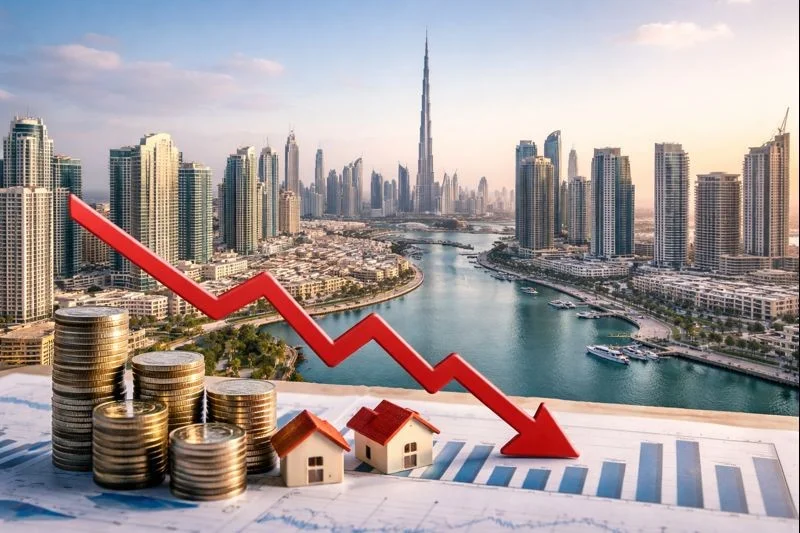
Dubai continues to draw investors since it combines tax benefits, open laws for foreign buyers and a robust off-plan market that provides flexible ways to start. Even with all these advantages, buyers still run into issues that can be avoided with the right guidance.
Our team works daily with ready and off-plan properties across the UAE, so we see where investors struggle and where they succeed. This guide walks you through the biggest traps people fall into and how to stay ahead of them as the market evolves.
After a historic 2025, when sales reached $187 billion across 215,000 transactions, 2026 has begun with a visible pause in investor decision-making. The most important story of 2026 is the gap between new supply and buyer confidence. In this environment, avoiding mistakes is not just about saving money — it is about staying positioned correctly while the market recalibrates.
Mistake 1: Not Understanding Your Investment Goal and Strategy

You need clarity on why you are buying before you start shortlisting anything. Some investors want rental yield, others care more about capital appreciation, and many want lifestyle benefits or Golden Visa eligibility. Dubai offers all these pathways, but each one requires the right choice of project and area. Off-plan tends to attract buyers who want growth, while ready units work better for immediate rental income. Lifestyle buyers need something very different from short-term holiday investors.
Why Does Goal Alignment Matter in 2026?
Dubai's residential market is entering a more measured phase after an exceptional multi-year boom, with pricing trends now increasingly differentiated by location, asset quality and unit size. This means that blindly buying whatever is popular no longer works — every goal now points to a very specific type of asset.
As of December 2025, the Residential Market Sales Price Index rose 12.88% year-on-year, with villas up 15.16% continuing to outperform apartments up 12.52% — consistent with an ongoing preference for larger-format homes and more quality-led segmentation. If you are investing for rental income, the numbers are different from if you are investing for capital growth. If you are investing for the Golden Visa, your goal changes again — you need a property that meets the minimum visa requirement, sits in a good community and holds value long term.
When you lock in your goal early, you avoid buying the wrong thing. Many first-time buyers end up choosing a villa when they only needed a one-bedroom for rental returns. Others buy a remote off-plan project because the photos looked great, even though they wanted rental income right away — and that mismatch delays their returns for years.
Mistake 2: Location Mistakes — "Wrong Area, Wrong Outcome"

Choosing a Location for the Wrong Reasons
Buying because an area looks trendy or is hyped in marketing remains a common and costly mistake. What actually supports value are fundamentals: connectivity, infrastructure, transport links, neighbourhood growth and tenant demand.
Engel & Völkers February 2026 data shows Downtown Dubai at AED 2,980 per sq ft, Business Bay at AED 2,673 per sq ft, Dubai Marina at AED 2,061 per sq ft and JVC at AED 1,448 per sq ft — giving buyers a clear benchmark to assess whether any asking price is fair for the location.
Overlooking Micro-Location Factors
Even in a strong zone, you can underperform if the micro-location lacks essentials: metro or road access, schools, clinics, retail or a decent tenant base. These affect occupancy and yield more than a big-name postcode.
Skipping Comparison With Similar Properties
Benchmarking is critical. Check what similar properties in the same building or community have sold for, what the average rent is, what the price per sq ft is and how resale has performed. Use a broker that offers local data on yield, vacancy, rental demand and supply pipelines — this helps you pick areas with strong fundamentals, not just strong marketing.
Mistake 3: Developer and Project Risks — "Who You Buy From Matters"

Understanding Developer Track Record
In Dubai, many off-plan projects exist but delivery delays, quality issues and customer complaints still occur. Major developers continue to lead market activity. DAMAC Properties topped off-plan transactions, followed by Emaar Properties and Binghatti. In the resale market, Emaar maintained a strong position, reflecting the demand for established communities. However, supply timelines remain subject to construction challenges.
Knowing How Payment Plans Actually Work
Off-plan payment plans are often attractive because they appear flexible, but there are hidden risks. Construction can run slower than planned, amenities may be delayed and reselling while unfinished can be harder than expected. Many new investors underestimate this.
Verifying Registration With DLD and RERA
All serious projects should be registered with the Dubai Land Department (DLD) and listed under RERA. This offers transparency and protection, especially for off-plan buyers.
Checklist for Developer Due Diligence:
- ● Past projects, completion history and handover track record
- ● Escrow account structure and fund release schedule — confirm which bank holds the funds and how releases are tied to construction milestones
- ● Project registration numbers with DLD and RERA — request the registration number and developer licence before committing
- ● Customer reviews and local market reputation — look at how past clients describe post-handover support, build quality and snagging
Mistake 4: Financial Mistakes — "The Hidden Costs and Maths"

Underestimating the Total Cost of Purchase
Many buyers look at the published price but miss the total picture — agency fees, transfer fees, DLD registration, service charges, maintenance, vacancy days and possible exit fees. These shape your true return.
A full cost breakdown to review before purchase:
- ● Purchase price
- ● Up-front fees: agent + transfer + legal
- ● Annual service charges and community costs
- ● Maintenance, vacancy buffer
- ● Planned exit or resale costs
Dubai's total residential inventory stood at roughly 935,000 units by end-2025, with about 46,700 homes delivered during the year. Around 55,000 units are expected to be handed over in 2026 and approximately 75,000 in 2027. This means service charge competition is real — buyers need to factor annual costs into net yield calculations before purchasing.
Relying on Fast Flips
Avoid relying on 12–24 month flip strategies. That game worked in 2021–2023. It is much riskier in 2025–2026. Dubai's cycle is strong but expecting a quick flip in the current environment is dangerous, particularly in mid-market apartment segments where supply pressure is building.
Forgetting Long-Term Costs Like Service Charges
Buildings and communities with many amenities carry higher annual expenses. Missing these charges can significantly shrink your net yield if you plan to hold for rental income.
Mistake 5: Legal and Regulatory Mistakes — "Don't Let Paperwork Undermine You"
Not Checking Freehold vs Leasehold
While many zones in Dubai and the UAE allow full foreign freehold ownership, some areas are leasehold or have restrictions. Buying without verifying ownership rights puts you at significant legal risk.
Relying on Verbal Promises Instead of Written Agreements
In the UAE, only the written contract — the Sale and Purchase Agreement (SPA) — defines your rights. Verbal promises, marketing claims or informal agreements hold no legal weight.
Delays in DLD Registration or Missing Documentation
Failure to register promptly with the DLD or incomplete documentation leaves you vulnerable. A licensed broker plus a legal advisor ensures compliance.
Document checklist:
- ● SPA draft and terms
- ● Title deed or Oqood for off-plan
- ● Developer registration certificates
- ● Escrow account details
- ● Power of Attorney if buying remotely
Mistake 6: Timing and Market Dynamics — "Don't Let FOMO Drive You"
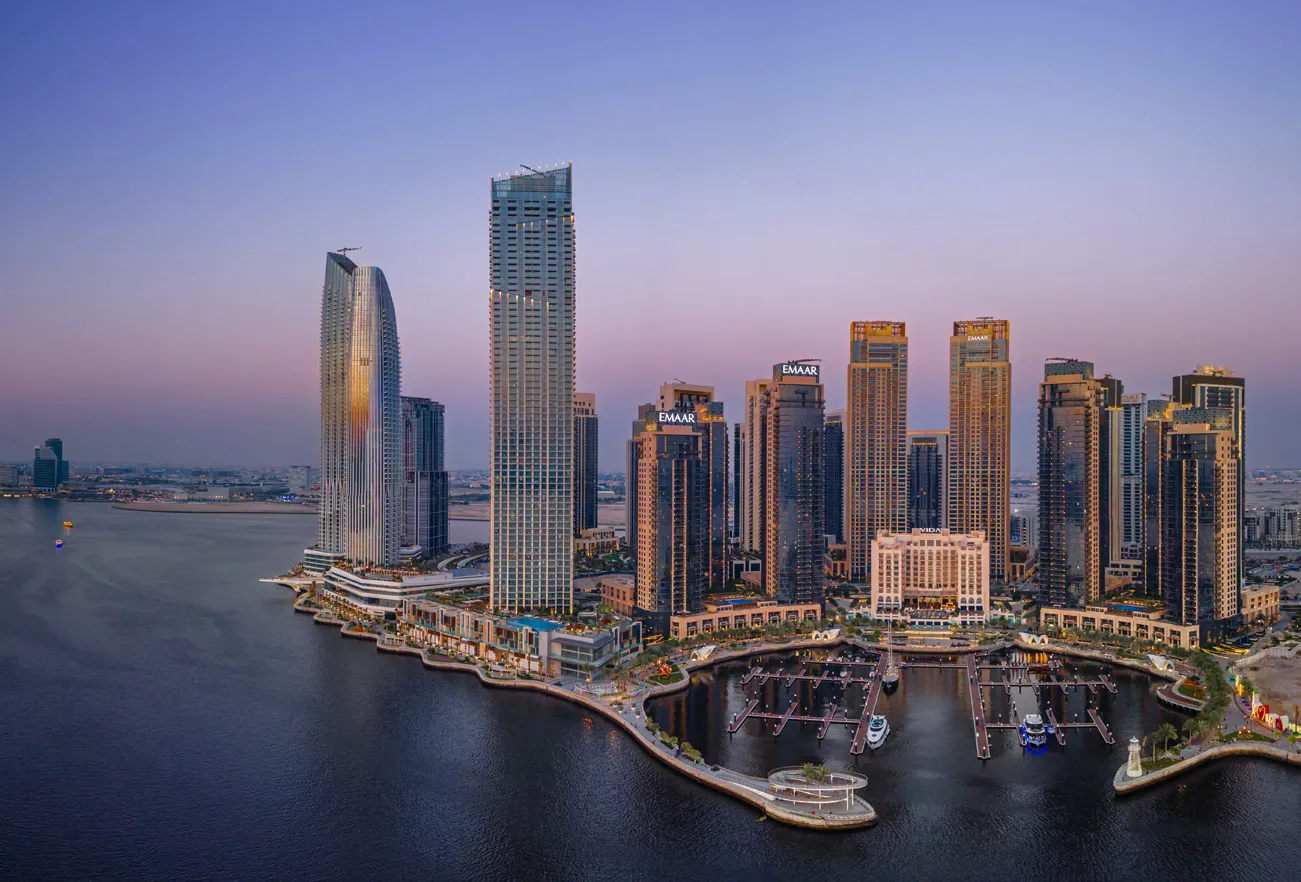
Timing really matters in Dubai. Some buyers rush in because "everyone else is buying," but they get caught in moments where supply surges or yields soften.
We are leaving the post-COVID boom cycle and entering a period of sustainable growth. Last year's benchmarks, where some segments in 2025 posted over 15% year-on-year price growth, were exhilarating but ultimately unsustainable. That pace is now moderating. What we are witnessing is not a price drop in an alarming sense, but a healthy market stabilisation.
Oversupply risks are concentrated in specific segments. Nearly 45% of under-construction stock is located across five districts — JVC/JVT, Dubai South, MBR City, Business Bay and Dubailand Residence Complex — while about 66% of upcoming units comprise studios and one-bedroom apartments. Buyers need to understand which segments carry this risk and avoid entering them purely on sentiment.
Prime areas with limited supply will hold value, while oversupplied zones may underperform. Luxury villas and branded residences may continue to appreciate because demand is global and supply is limited.
Smart timeline approach:
- ● See Dubai property as something you hold for a few years, not something you buy and sell quickly. A realistic window is usually 3 to 7 years
- ● Watch how many new properties are being built and when they will be ready — track whether demand is absorbing supply
- ● Have a clear exit strategy: hold for rental income plus capital growth, or plan resale after a specific milestone
Mistake 7: Property Type and Usage Decisions — "One Size Does Not Fit All"

Every property type has different performance dynamics in Dubai.
Apartment yields range between 8% and 9.5% in mid-market areas, while villas offer between 5% and 8.4%. However, yield alone does not tell the full story.
- ● Studios and 1-bed units often have strong occupancy, especially near business districts and transport hubs
- ● 2–3 bed apartments may offer balanced yield and growth for families or end-users
- ● Villas and townhouses often suit long-term holders, lifestyle buyers or families wanting space and capital growth — and are significantly undersupplied relative to demand
- ● Ready vs off-plan — ready units give immediate rental income; off-plan offers lower entry cost but requires patience and carries delivery risk
Around 66% of upcoming units are studios and one-bedroom apartments, with apartments making up over 86% of future supply. In contrast, villas and townhouses remain relatively scarce — a structural imbalance that makes larger-format homes a stronger long-term hold.
Quality also matters. Better finishing, strong amenities and reputable project branding lead to stronger rental demand and resale value. Use your agent's data on which property types show the highest rental demand and lowest vacancy in your chosen area.
Bonus Mistake: Partner and Agent Mistakes — "Your Support Team Matters"
Even a strong property selection can fail if you pick the wrong partner.
Working with an unlicensed or inexperienced agent — Always confirm the broker's RERA licence number, background in the area and past deals.
Not requiring full transparency — Ask clearly: Are they representing you or the seller? What commissions or incentives are involved? Can they share real rental and sales data for the community? Your agent's job is to help you meet your goal — yield, growth, visa or lifestyle — not push you into projects where they earn more commission.
Conclusion and Action Plan
Knight Frank anticipates ongoing but modest appreciation for 2026, with price rises of around 3% in the prime segment while the mainstream market is likely to average around 1% by year end, consistent with a market that remains supported by underlying demand while transitioning into a more balanced stage of the cycle.
For investors, the priority now is not panic but precision — choosing the right communities, the right asset quality, and the right timelines. Dubai's property market rewards buyers who prepare well and avoid the traps that catch first-time investors.
The strongest investors understand their goal, choose the right location, check the developer's history, calculate all costs and follow proper legal procedures. Start with a clear roadmap: define your goal, shortlist suitable areas, compare numbers, review the project carefully, check all documents and plan your exit strategy.
FP Property specialises in both ready and off-plan properties across the UAE, and we use updated on-ground data to help you make the right decision. Contact us anytime to review your investment plan or explore the best options available right now.