
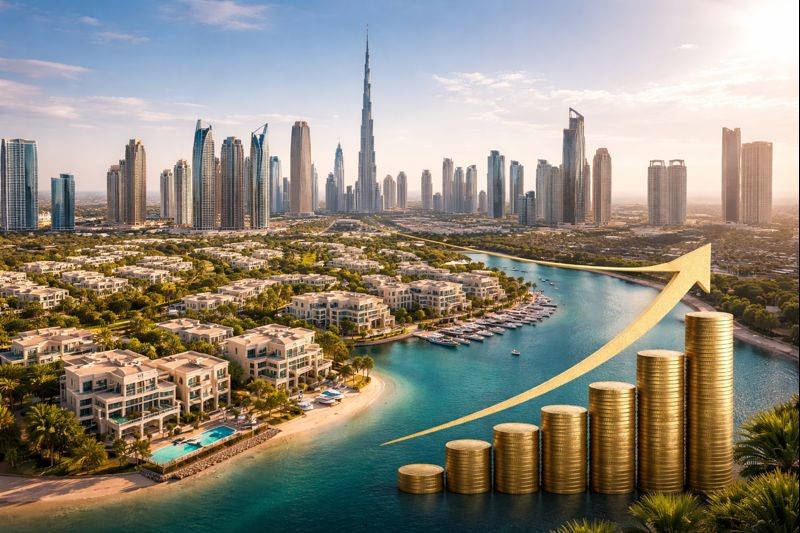
Density Affects Both Lifestyle and Long-Term Value
When purchasing property in Dubai, the majority of people focus on location. While this is important, one thing that is often overlooked is that of density. How many homes are built in proximity to each other, and how many people are sharing the same facilities? Density does more than alter what a neighbourhood looks like. It affects your lifestyle, convenience, privacy, and even your long-term financial returns.
FP Property has realised that one of the reasons for a lot of buyer regrets in Dubai has been a mismatch with density. People buy a high-rise tower for the splendid view of the sea and the best skyline, but get lifts crowded, and the noise is there all the time. Others prefer a quiet village community and do not think about the cost or the distance it takes to maintain one or to get to work.
In this blog, we venture into understanding the difference between high and low-density towers and communities in Dubai and help buyers and investors to make informed decisions.
What Counts as High-Density vs Low-Density in Dubai?
Before we can compare lifestyles, however, it would be important that we are able to define what we mean by high and low density.
High-Density Towers: These are groups of buildings of a number of storeys that are located near each other. Frequent sharing of lifts, lobbies, gyms, and other areas is common amongst the residents. Some examples of these are Downtown Dubai, Business Bay, and Dubai Marina. Even the luxury towers can be crowded, especially at peak hours, as many families or tenants are living in a small footprint.
Low-Density Communities: These are the areas where there are villas, townhouses, or fewer buildings spread out on larger plots. Residents have the advantages of private gardens, wider streets and less pressure on shared amenities. Popular examples include the Arabian Ranches, Dubai Hills Estate, and Jumeirah Golf Estates.
A confusion is commonly found, however, that if a tower is a luxury one, then it definitely implies that it is a low-density one. In reality, some luxury towers have hundreds of units and, therefore, shared facilities, such as pools and gyms, may be busy.
Lifestyle Differences That Matter in Real Life
The following are some of the lifestyle differences that you should know about:
Privacy, Traffic Noise, and Common Area Traffic
High-density living goes hand in hand with places of sharing everywhere. You wait for lifts, walk through the crowded lobbies, and you may be bombarded with neighbour activity constantly. Noise can be a problem, particularly inside towers where there are thin walls or open terraces.
There is more privacy in a low-density community. You don't worry about the people walking by your window; the playground is not as crowded, and your garden or balcony is more secluded.
Parking, Access, and Day-to-Day Comfort
Parking is a key difference. Towers with high densities tend to have less visitor parking. Residents may be forced to reserve parking spaces or share spaces. Access roads can be congested during the peak hours, your commute to work, or your day-to-day errands.
Low-density communities typically have one parking space per villa; ample parking for visitors in the street, and less congested roads. This allows for errands, deliveries, and casual visits to be easier.
Pet and Family Friendliness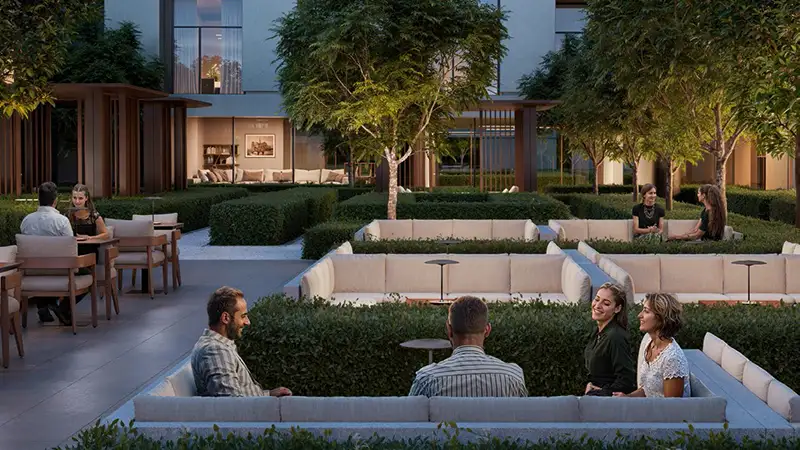
Families and pet owners prefer to live in low-density communities. There are areas in the outdoors, parks, and gardens, where the children and pets are safe to play.
High-density towers could have small playgrounds or pet areas, although these tend to be used by a large group of residents. This, in turn, can lead to a lack of space and ease of use for daily use.
Ownership Costs and Service Charge Differences
When comparing the cost of high-density towers and low-density communities, one of the biggest differences is when it comes to the cost of ownership and service charges.
High-Density Towers: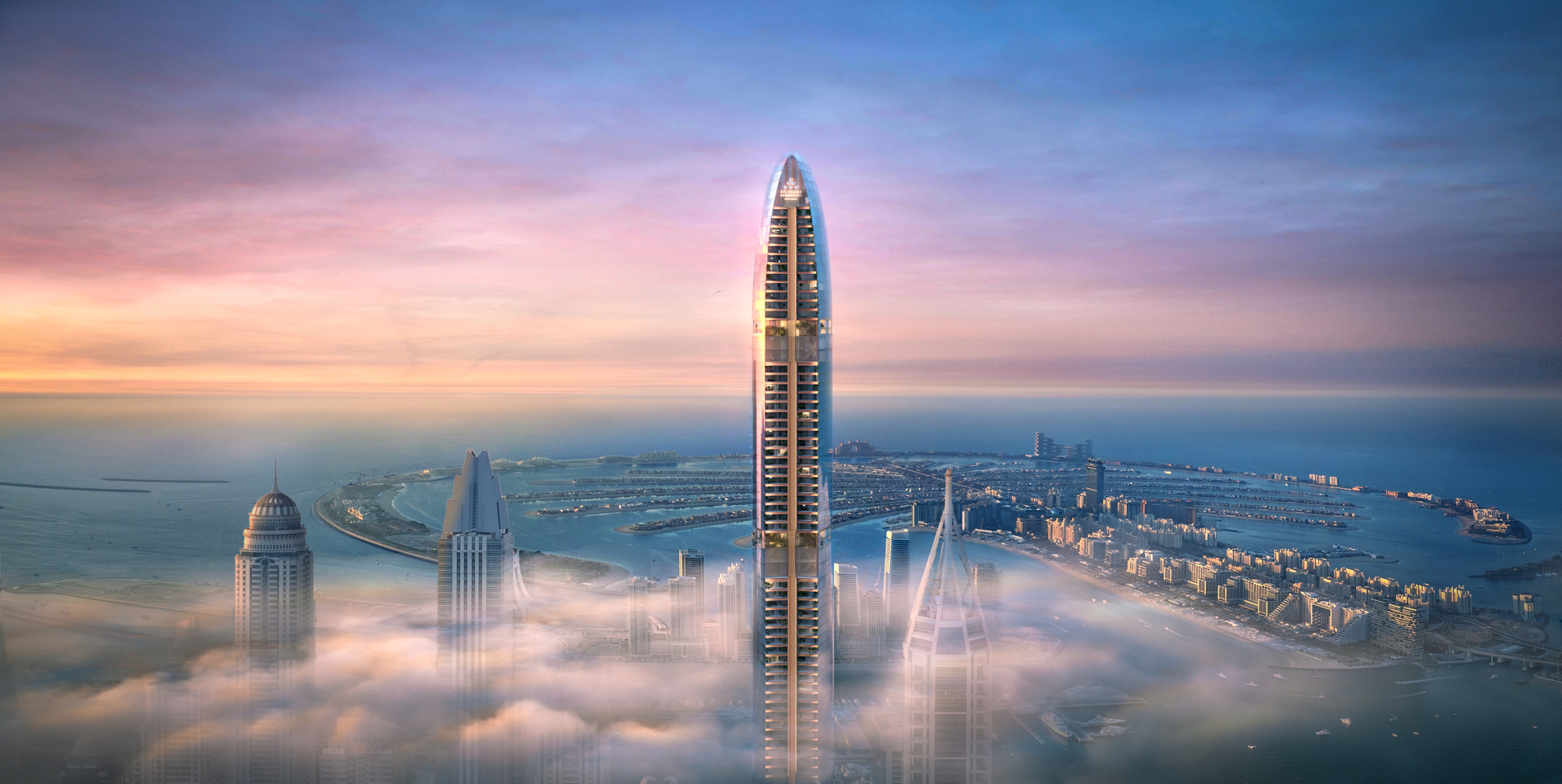
These buildings usually have common facilities such as swimming pools, gyms, spas, landscaped gardens, a concierge, and even retail outlets in the podium. While convenient, such amenities don't come cheap. Service charges in Dubai can range from AED 20 to 50 per Sq. Ft / Anum Dependent upon building and services provided. In luxury towers, the annual cost of services could even exceed AED 100,000 for bigger apartments. High- density living also means that there is a high volume of lift use, shared corridors, and other facilities, which will cause more wear and tear and which could lead to higher maintenance costs over time.
Low-Density Communities:
In case of the villa or townhouse communities, there are fewer shared facilities, and thus, the annual service charges are less and more predictable. However, there is more responsibility on the owner when it comes to the maintenance: garden, private pool, fence, or minor renovation.
While this is good in terms of control, it also means that being careful when it comes to budgeting for maintenance. On the upside, you don't have very sudden booms in service charges because of the heavy use of other residents in the case of high-density towers.
These differences are important to understand in a scenario where financial buyers plan out their finances in a realistic manner. A few might wish for a high-rise with predictable and pooled costs and luxury amenities, while others may be willing to take on individual responsibility for maintenance for the sake of privacy and space.
Rental Performance: Which Density Tenants Prefer
Rental performance is an important factor to investors, and density plays a big role in attracting tenants.
High-Density Towers:
These towers are so popular among the young professionals, singles, and couples working around Downtown Dubai, Business Bay, or Dubai Marina. They often have a greater value on amenities and short commute time vs. outdoor space. Short-term rentals are also doing well in these places, as the people don't look for privacy there; they are looking for convenience and lifestyle. Investors may be able to command better rents for well-located towers having modern facilities, but there may be frequent turnover of tenants with the attendant risk of no rental income and greater management efforts.
Low-Density Communities:
Families who prefer peace, space, and schools close to each other prefer villas or townhouses. Tenants in these communities often have longer tenancies, which provides stable rental income. Long-term leases are commonplace, and this assists with the churn and associated costs to landlords. While monthly rents can be slightly lower than in terms of rent per square foot from high-rise apartments, it is often true that the stability and long-term reliability offset the difference for investors who are looking for steady returns.
Choosing the right type of property depends on the type of tenant that you are trying to attract and the rental income strategy that you are following.
Resale Demand and Liquidity Differences
Density has a direct effect on how easily and speedily a property can be sold out.
High-Density Towers:
Towers appeal to the large pool of potential buyers from singles and couples, up to the investors seeking short-term rentals. Banks are happy to do financing on apartments in popular towers, and there is more liquidity. Properties in the high-demand areas of Downtown Dubai or Dubai Marina can often be resold in a matter of months, if priced correctly. However, there is a high level of competition, and buyers may consider several similar units before making a decision.
Low-Density Communities:
Villas and townhouses are more restricted in appeal to buyers, and they are mainly sought by families or buyers who are lifestyle-led. Financing for villas is pretty easy; however, a smaller audience can help to increase resale cycles. Nevertheless, with the privacy and the outdoor space provided by these communities, buyers are often willing to pay a premium, especially for well-located units, ones close to schools, parks, or major roads.
So understanding the dynamics of the resale is important to investors, as well as end-users. Choosing the right density can have an impact on liquidity, speed of sale, and return on investment.
Who Benefits Most From High-Density Towers?
High-density towers are ideal for people who like to live in an urban environment where everything is fast. Singles and young couples, for example, tend to gravitate towards such properties as they place less importance on privacy or outdoor space and more importance on convenience, amenities, and access to city life. Living in a tower close to Downtown Dubai, Business Bay, or Dubai Marina means being close to offices, spots, cafes, gyms, shopping centres, and entertainment.
These towers are also good for investors who are interested in short-term rental opportunities. Apartments in the strategically located towers are attractive for professionals and tourists for the sake of convenience and lifestyle. The facilities they are sharing can be in the form of gyms, pools, concierge services, etc., which makes it more attractive and easier to find tenants for renting. Overall, high-density towers are best for people who prefer to live for efficiency, social interaction, and urban vibrancy rather than having the ability to live in a private space.
Who Benefits Most From Low-Density Communities?
Low-density communities, such as the villa or townhouse communities, are ideal for families and permanent residents who enjoy space, privacy, and access to the outdoors. Children can safely play in their own gardens or in community parks, and pets can have the space to roam freely. These communities are typically quieter with less traffic and fewer community facilities to share, for peaceful living.
Buyers who choose the low-density areas, however, are often doing so for lifestyle rather than investment return reasons. These properties are attractive to people who wish to settle down and have the slower pace of life, and be in control of their home environment. For families, however, location near schools, parks, and healthcare facilities makes these communities even more attractive. In short, low-density communities are for those who have and desire the comfort of privacy and long-term stability.
Risks Buyers Should Watch Out For

Both high-density and low-density have their own potential issues to deal with, and it is up to the buyer to know them all before making a purchasing decision.
High-Density Towers: Living in a high-density tower does come with its share of benefits as well as risks, but with shared amenities. Shared facilities, including gyms, pools, and lobbies, are used by multiple residents; this can mean that these facilities can wear out more quickly than lower-density buildings. This means that there may be an increased cost of maintenance over time, and sometimes unexpectedly.
Service charges, which cover the maintenance of these areas that are shared, can rise or fall at any moment, and hence may financially burden owners. Investors also have the problem of tenant turnover as apartments in towers tend to be occupied by short-term renters or young professionals who move often. Daily living can be affected too; noise from neighbours, crowded lifts, and busy lobbies can affect the sense of privacy and comfort that residents expect.
Low-Density communities: Although these communities provide more room and privacy, they have other obligations, too. It is usually the job of the person who owns the property where the rubble is found to maintain private gardens, pools, driveways, and other personal or semi-private facilities. These costs will be costly and require a great deal of budgeting. Renovation and maintenance cycles need to be planned in order to avoid any sudden expense or deterioration of the property. Additionally, some villa communities have strict rules about modifications, renovations, or the use of shared spaces, which can limit flexibility for owners looking to make changes.
Finally, resale may also be slower in low-density areas since there is less of a pool of buyers, particularly for properties that are in niche areas. For buyers, they may have to wait longer to find the right purchaser, which may have implications for liquidity and investment plans for the long run.
Understanding these risks in advance helps buyers to make informed decisions that are appropriate to their lifestyle as well as investment strategy. By weighing the balance of convenience of high-density living versus the control and space of low-density communities, buyers have the opportunity to choose a property with a balance for comfort, cost, and long-term value.
FP Property Insight: How We Match Clients to Density Type
FP Property is on a personal level to help clients choose the right type of density. The whole process begins with a lifestyle analysis, such as family size, pet ownership, workplace, and daily routines. This is to keep in mind the fact that the property will suit the client's real-life needs instead of aesthetic preferences.
Next, we carefully analyse costs such as annual service charges, maintenance, and possible renovation costs. Understanding such financial obligations in advance means that the buyers are in a position to plan their budget effectively. Finally, we consider the possibility of resale in the future and market trends to be sure that the property selected fits long-term goals. By combining their lifestyle, financial, and market intelligence, FP Property assists its clients in selecting properties that provide comfort and convenience and good value for investment over time.
Market Outlook: Where Dubai Demand Is Moving
The Dubai property market is undergoing a change, and it is important to have an understanding of these trends when you are trying to choose between high-density towers and low-density communities. Family demand is on the increase, where there is more demand by buyers for spacious villas and townhouses with outside areas and privacy. At the same time, high-density developments are getting more efficient and offering smart layouts and multi-functional spaces to make small living more comfortable.
Developers are also experimenting with hybrid models - i.e., mid-rise clusters in villa communities to cater to various buyer preferences. As buyers are beginning to value usability and comfort more than ever before, in addition to the long-term livability of a building, properties that feature a balance of space, amenities, and location are getting a leg up. Investors and end-users should monitor these trends to ensure that their purchases are made in accordance with future demand, so that they can benefit from enjoying their lifestyles as well as the potential for financial returns.
Conclusion: The “Best” Option Depends on Lifestyle and Strategy
So choosing between high-density towers and low-density communities for Dubai is all about lifestyle, priorities, and long-term aims. High-density towers provide convenience, modern amenities, and good rental potential and are suitable for singles, young couples, and short-term rental investors. Low-density communities offer privacy, space, and a family-friendly environment that attracts long-term residents as well as those buyers who are interested in lifestyle.
There is no one-size-fits-all answer, and the best property is the one that is suited to your own personal needs, financial plans, and future expectations. Consulting FP Property can help you shortlist communities that can help you meet your real priorities, and ensure that your choice can help you be successful in both your day-to-day comfort and your long-term investment success. Proper planning now helps you to avoid regrets, oversee the future, and enjoy both the lifestyle and financial benefits of your Dubai property.