

The UAE has become one of the most appealing real estate investment locations in the world. Strong infrastructure, political stability, investor-friendly laws, and long-term residency options have made property ownership a serious wealth-building tool. Cities such as Dubai and Abu Dhabi continue to attract investors, both local and international, who are seeking steady income and long-term growth.
Within the last few years, there has been a clear rise in portfolio investors in the market. These are buyers who own more than one property and are actively planning to grow their holdings over time. Some are UAE residents who are reinvesting rental income. Others are foreigners diversifying their global assets. Unlike single property buyers, portfolio investors have more complicated financial decisions to make at each step of the way.
Buying a single property is normally an emotional choice combined with simple (affordability) checks. Managing several properties is very different. It involves planning with respect to cash flow, financing, risks, taxes, and exit timing. Without structure, however, strong portfolios can perform under pressure.
Financial planning becomes the key to long-term success. It helps investors avoid over-leverage, market cycle management, and liquidity protection. In the UAE, where things happen quickly and there are many different payment structures, planning is not a choice. It is the distinction between short-term gains and sustainable wealth.
Understanding the UAE Property Investment Landscape (Context Setting)

Before planning finances, investors must know how the UAE property market works. Many investors avoid this step and jump right in to buy, which usually leads to mistakes later on.
One key factor is that of ready and off-plan properties. Ready properties tend to produce rental income immediately. They are easier to evaluate as prices as yields are visible. Off-plan properties come with cheaper entry prices and flexible payment plans, but you just have to be patient. Cash flow planning is critical as income only starts after handover.
Ownership laws are also varied as per different emirates and zones. Dubai has freehold ownership in designated areas for foreign investors. Abu Dhabi has freehold in investment zones and long-term usufruct in others. Sharjah has specific rules targeting mainly GCC and long-term residents. Ras Al Khaimah is more open with several freehold projects to attract global buyers. These differences have an impact on resale value, access to financing, and long-term planning.
Resident and non-resident investors also have different considerations. Residents generally have better access to mortgages and better financing terms. Non-residents may require larger down payments and have more onerous approval processes. This has a direct effect on the growth speed of the portfolio.
Another aspect is the financing structure, which is important. Some developers have long-term payment plans with low initial costs. Banks offer mortgages with tighter checks and more definition of ownership. Making decisions between developer-backed plans and bank financing influences cash flow and risk exposure at the portfolio level.
Setting Clear Investment Objectives for Multiple Properties
Every successful portfolio begins with good goals. Without having set objectives, investors tend to buy properties randomly and have problems managing them later.
Some investors are capital appreciation-oriented. They would seek to buy in emerging areas where prices are expected to rise with time. Others are more interested in rental income and the stability of yields. Many experienced investors take a mixed strategy of both income and growth.
Short-term flipping is another way, particularly in off-plan markets. It is capable of producing rapid returns at a higher level of risk and relies on the timing of the markets to a great extent. Long-term holding is more stable and is for investors who are making wealth over time through rental income and appreciation.
Diversification based on the type of asset is also important. Residential properties offer constant demand. Commercial ones can provide higher yields, but have risks of vacancy. The combination of both can benefit the overall balance of a portfolio.
Location strategy plays a major role. Yield-focused areas such as Dubai Marina or International City will often offer good rental income. Growth corridors such as Dubai South or parts of Ras Al Khaimah are where investors are looking for future appreciation. Business Bay is a mixed profile with both rental demand and capital growth potential.
Clear objectives that guide investors in determining where and how to buy, and when to sell. They also avoid emotional decisions based on short-term market noise.
Cash Flow Planning Across Multiple Properties

The lifeline of a multi-property portfolio is cash flow. Even profitable properties can become a burden if cash flow is not managed well.
Many investors would buy several off-plan units with overlapping payment plans. If the dates of the instalments are not carefully scheduled, they may potentially collide and cause liquidity stress. The staggered payments between projects help to avoid this problem.
Rental income should optimally match instalment schedules and mortgage payments. Investors often reinvest rent received from completed units in order to finance new acquisitions. This generates a self-sustaining portfolio cycle when it is done correctly.
Costs other than purchase price are often underestimated. Service charges, maintenance, property management fees and government charges such as DLD fees all impact net income. These costs rise over time and have to be factored into projections.
A liquidity buffer is a must in an emergency. Vacancies, missed handovers or a slowdown in the market can lead to a temporary decrease in income. Having reserves ensures investors against forced sale or default on loans during difficult times.
Strong cash flow planning enables investors to be patient, negotiate better deals, and make decisions from an accurate standing.
Financing Strategies for Multiple Property Ownership

Financing gets more complicated with the addition of more properties. Many people take this lightly, but it is one of the most important aspects of portfolio planning.
Mortgage eligibility changes after investors own multiple properties. Banks look at the total exposure, the stability of income, and current liabilities. Rental income will enhance applications, but tends to be discounted by banks to consider vacancies.
Loan-to-value limits are also reduced for second and third properties. First properties may qualify for higher financing, and subsequent purchases require larger down payments. This affects the capital allocation of the portfolio.
Interest rate structure is important. For leveraged portfolios, fixed rates provide stability and predictability of cash flow. Variable Rates may begin lower, but risk the investors being at risk for rate hikes. The choice of what mix to choose depends on risk tolerance and outlook in the market.
Developer financing can provide flexibility and reduce up-front costs. Bank mortgage offers better ownership and longer terms. Each has pros and cons depending on the profile of the investor and strategy.
Experienced investors do not focus on maximising leverage, but on ensuring cash flow. Sustainable portfolios increase steadily without relying too heavily on debt.
Tax Efficiency & Legal Structuring in the UAE

The UAE is known for its tax-friendly environment that is attractive to global investors. There is no annual property tax, no annual capital gains tax to be paid by individuals in most cases. This gives substantial income retention to property owners. However, VAT works differently for different types of assets. Residential leasing is usually VAT-free, but commercial properties are liable for VAT on rent and services. It is important to understand these differences as they help investors to accurately estimate net returns.
Overseas tax exposure is another issue for expats and foreign investors. Income generated in the UAE can still be taxable in countries of residence, depending on residency and treaties.
Legal structuring is also important. Holding properties under a personal name is easy and widespread. Using a company structure may work for much larger portfolios or commercial assets, but it is associated with additional costs and compliance.
This area changes depending on individual circumstances. Investors should get professional advice on the cross-border and structural planning instead of resorting to general information.
Portfolio Diversification Across Emirates & Asset Types
Concentration of all properties at one location creates risk. Market correction, regulation changes, or oversupply may affect returns.
Diversification across the emirates reduces risk. Dubai is a place that offers liquidity and great demand. Abu Dhabi offers stability and government-driven growth. Ras Al Khaimah is coming out with tourism-based developments. Sharjah is attractive to yield-focused investors because of lower entry prices.
Asset diversification is also equally important.
- Apartments offer a constant demand for rental.
- Villas are attractive to family tenants and long-term leases.
- Branded residences provide the best positioning.
Commercial units provide income diversity when carefully managed. Balanced portfolios are more adaptable to market changes and more flexible at the time of rebalancing.
Rental Yield Optimisation for Multi-Property Owners
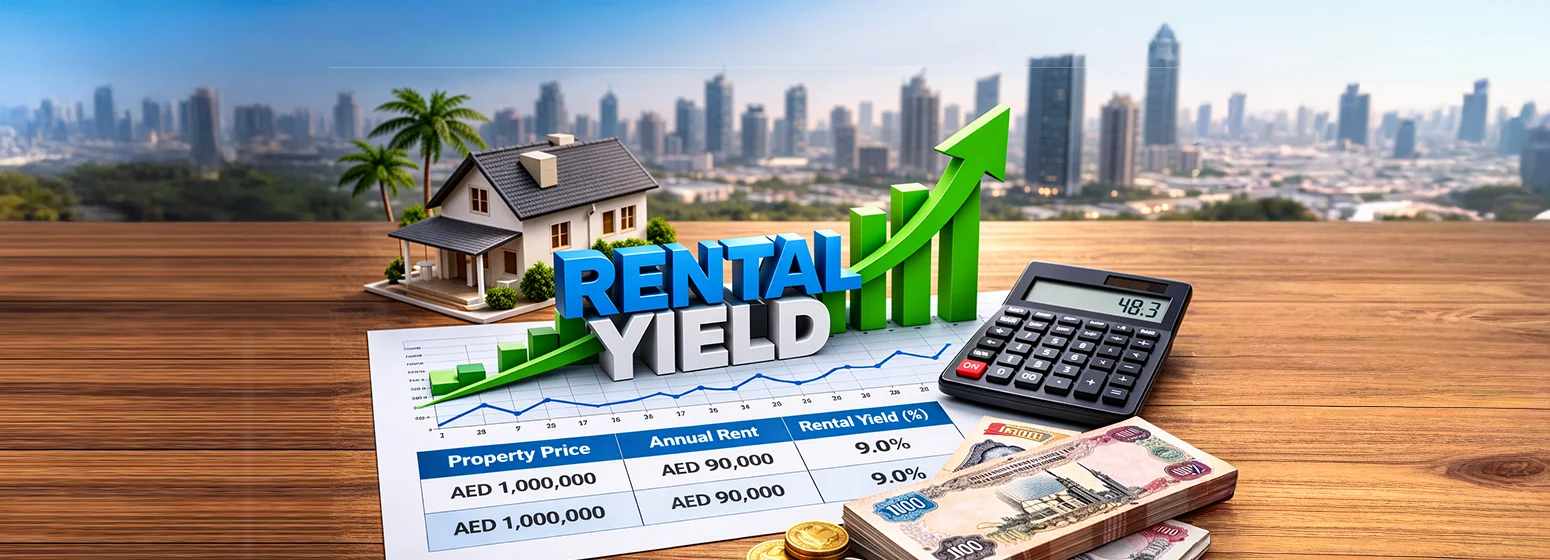
Optimising rental income requires active management. Long-term leasing can provide stability, while short-term holiday rentals can provide higher income during peak seasons but need professional handling.
Furnished units may command a higher rent, particularly in central locations. However, there are costs associated with furnishing as well as wear and tear. Unfurnished units have less maintenance and stable tenants.
Professional property management helps mitigate vacancy, tenant problems, and protect asset condition. Self-management may be cost-effective in saving fees but requires time and local knowledge.
Pricing strategy matters. Floating rents so that they reflect underlying market conditions during periods of high demand and are competitive during off-seasons keeps occupancy high across the portfolio.
Reducing the vacancy across multiple units has a significant impact on overall returns, even if the rents within the units are slightly lower.
Managing Risks in a Multi-Property Portfolio

Every investment is a risk. Managing multiple properties is a means of increasing exposure if risks are ignored.
Market cycles have an impact on prices and rents. Entering too early may cause delays in returns. Interest rate changes affect the cost of mortgages. Overleveraging increases losses during times of downturn.
Off-plan investments are risky with regard to delivery. Delays can interfere with cash flow planning. The developers should be reputable, and the timelines should not be too aggressive to reduce this risk.
Exit planning should start before buying. Knowing how and when to sell offers flexibility in case of changing conditions. Risk management is not about not investing. It is about being prepared for the unknown.
Exit Strategy & Portfolio Rebalancing
Many investors are focused on buying only. Smart investors plan their exits.
Selling decisions must be based on performance and not emotion. Underperforming properties could tie up capital better used elsewhere.
Capital recycling enables investors to shift their funds to other higher-growth assets or to reduce debt exposure. Timing exits based on market cycles leads to better results.
Regular portfolio reviews assist in maintaining balance and alignment with long-term goals.
Common Financial Mistakes Multiple Property Investors Make in the UAE

Many investors overestimate rental yields, not taking vacancies and costs into account. Others ignore rising service charges that result in decreasing net income over time.
Buying similar properties in the same area restricts diversification. Not stress testing the finances against rate hikes or income drops is creating vulnerability.
Failing to plan the timelines for refinancing is likely to result in cash flow pressure when loan terms change. Avoiding such mistakes requires discipline, not complexity.
How a Dubai-Based Real Estate Brokerage Adds Value to Financial Planning
A professional real estate brokerage in Dubai does much more than just property listings. Experienced firms provide investors with access to off-market deals and early project launches not generally advertised. These opportunities can often come with better prices at entry, as well as more flexible payment structures, which can significantly improve long term returns.
Strong brokerages also work underneath a portfolio mindset. Instead of having a focus on one transaction, they aid investors in planning over multiple properties and future phases of growth. Data-driven information on pricing trends, rental demand, and areas' performance so investors can select locations based on their income or growth goals.
Another important benefit of it is the negotiation and coordination. Brokerages often facilitate price negotiations with developers, help arrange mortgages and manage the leasing and resale process. This helps reduce delays, ensures costly mistakes are avoided, and helps to reduce risk. As portfolios grow, this level of structured support can be very valuable.
Who Should Consider Multiple Property Ownership in the UAE?
Multiple property ownership in the UAE is most suited for investors with stable financial foundations. High-income residents can benefit by reinvesting excess income into income-generating assets instead of having idle capital. Over time, rental income can fund further expansion.
Business owners typically invest in property to diversify their wealth beyond their central business. This aids in balancing risk and establishing alternate sources of income. Global investors are also drawn to the UAE because of its tax-efficient environment and good long-term growth prospects.
Long-term UAE residents, thinking of future security or wealth to be passed on to generations, can see property as a sound foundation. Multiple ownership is best for disciplined investors with a long-term perspective (and willing to make plans rather than chase quick gains).
Final Thoughts: Building a Sustainable Property Portfolio in the UAE
Building a successful property portfolio in the UAE is not about buying as many units as possible. It is about making smart decisions that work together over time. Strong financial planning helps investors control cash flow, manage risk, and stay confident during market changes. When goals are clear and financing is structured properly, properties support each other instead of creating pressure.
The most successful investors focus on discipline rather than speed. They choose locations carefully, diversify across assets, and review performance regularly. They plan exits before entering deals and avoid emotional decisions during market highs or lows. This approach protects capital and allows steady growth.
The UAE continues to offer long-term opportunities for wealth creation through real estate. Investors who treat property ownership as a structured financial strategy, not just a purchase decision, are the ones who build lasting and sustainable portfolios.